First Oil: Low expectations for new UK prime minister
KURT S. ABRAHAM, EDITOR-IN-CHIEF & CHIEF FORECASTER
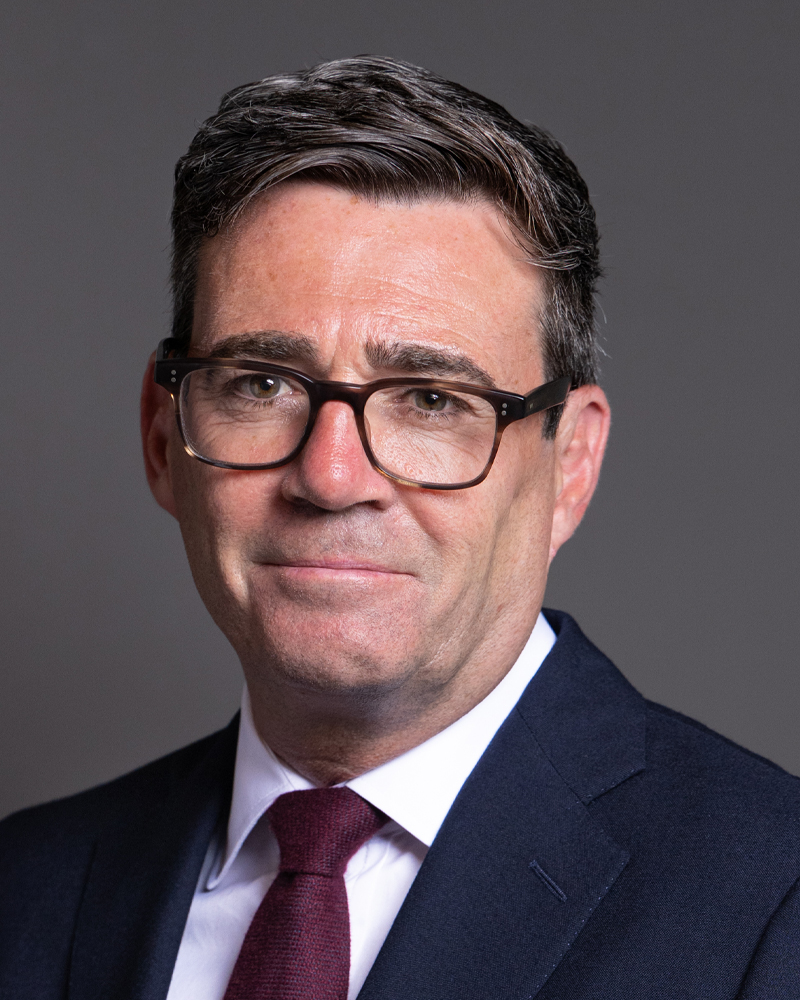
Well, folks, the United Kingdom has now sworn in its seventh prime minister in a decade. And one has to wonder how long this newest P.M. will last. Although he technically resigned, the immediate former P.M., Keir Starmer, was effectively dumped in favor of the latest new flavor in British government after just a shade over two years in office.
Indeed, 56-year-old Labour MP Andy Burnham (Fig. 1) was sworn in on Monday morning, July 20, as the UK’s 59th P.M., overall. And while one would hope that he would be some form of improvement over Starmer, a lot of folks in Britain already have low expectations for this new regime. And let this editor add his voice to the ranks of those who are not impressed with Mr. Burnham. There are plenty of reasons for this, including energy, which I will now elucidate.
First, let us consider that Burnham was “installed” as Labour’s choice to succeed Starmer without any significant opposition. Mind you, Burnham had not been in Parliament for nine years since 2017, having served as mayor of Manchester in that timeframe. And before serving as mayor, Burnham had been in the House of Commons as the MP for the Leigh constituency in the Manchester area from 2001 to 2017. But to get back into Parliament this year, the Labour leadership had to ask the M.P. of the Makerfield constituency, Josh Simons, to resign that seat, so that Burnham could stand for election to that position.
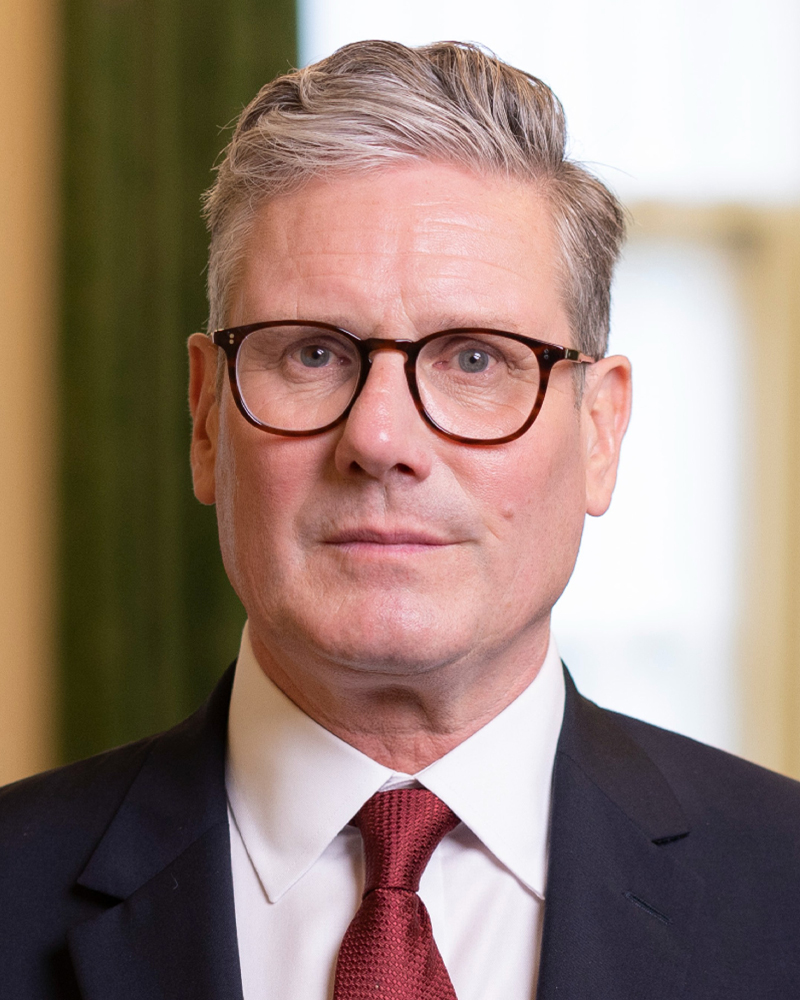
Burnham subsequently won election to the Makerfield seat on June 18, 2026. Meanwhile, four days later (June 22), Starmer (Fig. 2) announced his intention to resign as P.M., with the date to step down unspecified. Labour subsequently solicited nominations for the party’s leadership post during July 9-16, with Burnham the overwhelming favorite and no significant challengers in sight. Accordingly, having received 379 nominations, Burnham was the only eligible candidate when nominations closed, having been nominated by over 94% of all Labour MPs. A day later, he was named Leader of the Labour Party on July 17, 2026, and became Prime Minister three days later, on July 20, 2026, after King Charles III formally asked him to form a government. So, to many of us, the “fix” appears to have been in for Burnham to steamroll his way to the P.M.’s chair, much the same way that then-U.S. President Joe Biden was convinced in mid-2024to stand down for re-election in favor of then-Vice President Kamala Harris being anointed as the Democrat Party standard bearer.
Second, why was there such a rapid push to make Burnham the great “messiah” of the Labour Party and, in turn, the UK? A quick review of Burnham’s political career shows that he admits to being in the “soft Left” of Labour and that he rejects the “era of Thatcherism.” In a recent speech, Burnham says it was during that era that Britain took "a series of wrong turns in the 1980s," when political power was centralized, and economic power was handed to private companies. Burnham continued, "The country surrendered control of the essentials — housing, water, energy, transport — and left people exposed to higher costs." So, one has to assume that he wants to institute yet another form of liberal big government, where officials increasingly oversee operation of basic functions and services. Well, it didn’t work in the 1970s, and it won’t work now—why does he think Margaret Thatcher got swept into power in the first place?
It has become obvious that Burnham has been favored for what could be called a “façade of competence” during his nine-year tenure as mayor greater Manchester. He is cited for creation of the Bee Network, an integrated, London-style public transport system that unifies buses, trams, and cycling into one coordinated network. He also is credited with successfully reversing decades of Thatcherite bus deregulation, returning Greater Manchester's buses to public control and introducing capped fares to improve affordability. But the problem is who is paying for all of this?
He also is credited with laying the groundwork for integrating local trains into the Bee Network, paving the way for simpler tap-in, tap-out ticketing. But the integration won’t be complete until at least December 2026, so the jury is still out on this item. Similarly, his “A Bed Every Night” scheme is considered somewhat successful at the local level for providing consistent emergency accommodation, though street homelessness in greater Manchester continues to fluctuate.
He also has earned the nickname, "King of the North," by championing "left-behind" regions that have not shared overall UK prosperity. But again, who is going to foot the bill for making infrastructure improvements and coaxing new industries into these areas?
Third, what is Burnham going to do about energy, principally oil and gas? It doesn’t take a genius to see that the high utility bills of UK consumers are due primarily to horribly flawed (okay, let’s just say “crappy”) energy policies. Starmer was a believer in these renewable-heavy energy policies that continually ignored the realities of the fossil fuel component of Britain’s energy usage. Furthermore, he allowed the environmental activist portion of the electorate to lead him around by the nose, even as UK consumers increasingly howled about the country’s cost-of-living, which was exacerbated considerably by rising fuel prices.
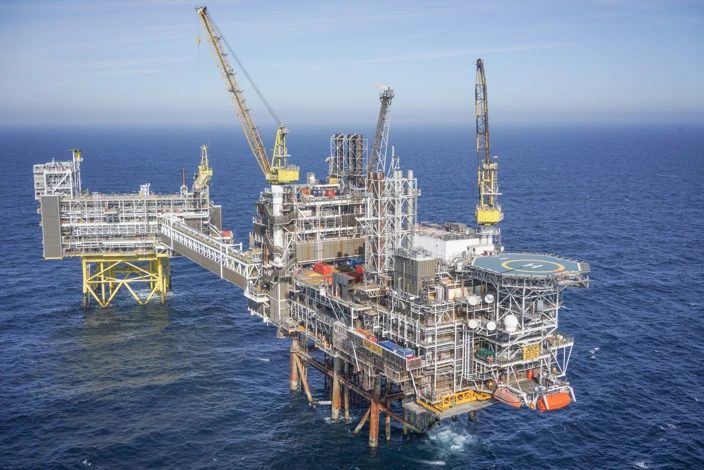
Starmer could have helped himself considerably by getting rid of the Energy Profits Levy (EPL), which was imposed in 2022 at 25% and raised to 38% on Nov. 1, 2024, Fig. 3. But he didn’t, for which we pummeled him repeatedly in World Oil over the last two years. Starmer also could have helped himself by opening up the UK North Sea wide open to new oil and gas exploration, but he didn’t do that either. One has to believe that EPL revenues are being used to prop up other big government projects and spending in the UK budget, therefore the Labour folks can’t afford to let it go.
So, with this background, what is Burnham going to do about energy? There has been some talk that he will fast-track oil and gas exploration in already-licensed fields of the North Sea. But that activity only goes so far toward building back British production. The country really needs wide-open exploration in new areas, but does Burnham have the stomach for it? And whatever course he does follow, this editor has every confidence that Labour will find a way to screw it up. And given some of the program initiatives that Burnham has announced, can you envision Labour giving up the EPL revenues? Not a chance. The real question is how long can this regime last?
IN THIS ISSUE
Special focus: Permian Basin Technology. We have a variety of topics in this month’s lead theme. For instance, two authors from GD Energy Products talk about maximizing horsepower delivery in frac fleets through advanced pump design. In another article, Expro managers describe how new technology is advancing well construction efficiency in the Permian basin. Additionally, several SLB SMEs discuss industry progress, new benchmarks and field insights that are advancing Permian basin drilling. Finally, an ABB Senior V.P. details the building of the electric foundation for the autonomous oil field of the future.
Offshore/subsea technology. A Halliburton expert describes how gel displacement supports subsea flowline decommissioning without production interruption. Using a chemically engineered gel displacement system to remove hydrocarbons from two late-life pipe-in-pipe subsea flowlines in the Norwegian North Sea demonstrated a repeatable approach for late-life subsea assets.
Regional report: Guyana and Suriname: Contributing Editor Gordon Feller says that a new petro-state corridor is taking hold off of South America’s northern coastline. And as they continue to ramp up activity, Guyana and Suriname are at the hinge of the Americas' energy map. Guyana has been the world's fastest-growing economy, and Suriname has sanctioned its first offshore oil project, with perhaps more on the horizon.
Related Articles- First Oil: Renewed enthusiasm exuded in Canada and within IPAA (June)
- SBM executive sees strong FPSO market on back of deepwater trend (April)
- IPAA’s annual meeting to re-visit site of association’s founding (April)
- First Oil: Trump administration makes a common sense move regarding offshore regulation (April)
- Multiple uncertainties characterize outlook for energy activity on the UK Continental Shelf (December 2025)
- Engineering for the deep: Human support and rescue systems (November 2025)