Energy NL’s Johnson sees renewed optimism for E&P offshore Newfoundland and Labrador after 10-year lull
Interview with Charlene Johnson, CEO, Energy NL

When the next history of Newfoundland and Labrador (NL) is written, one will notice a severe, prolonged downturn in offshore capital investment and exploration experienced by the province’s maritime E&P sector, which more than coincidentally parallels the nearly 10-year tenure of former Canadian Prime Minister Justin Trudeau, from November 2015 to March 2025.
Indeed, NL has experienced stalled exploration, with drilling for new fields hitting a standstill in the last couple of years. There also has been a production decline, with output dropping, due to natural field depletion. Production averaged around 209,000 bopd in 2024, down significantly from peak levels exceeding 368,000 bopd. The industry also has shed thousands of direct and indirect supply chain jobs since the 2014-2015 oil price crash and subsequent pandemic impacts. Not surprisingly, royalties have dropped as a percentage of provincial revenues, falling from 32% in 2011–2012 to around 15% of late.
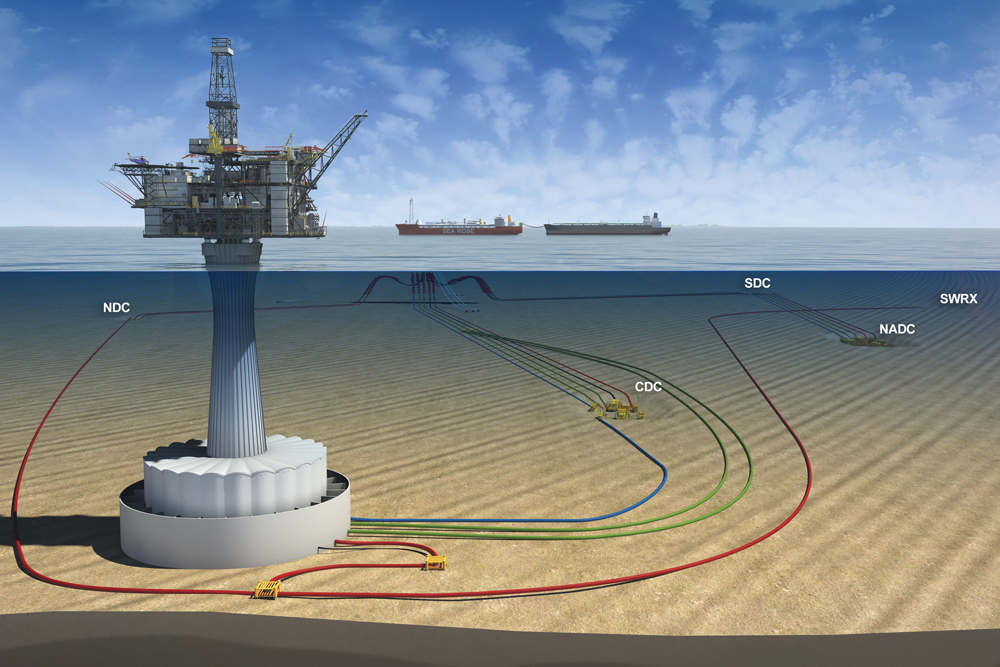
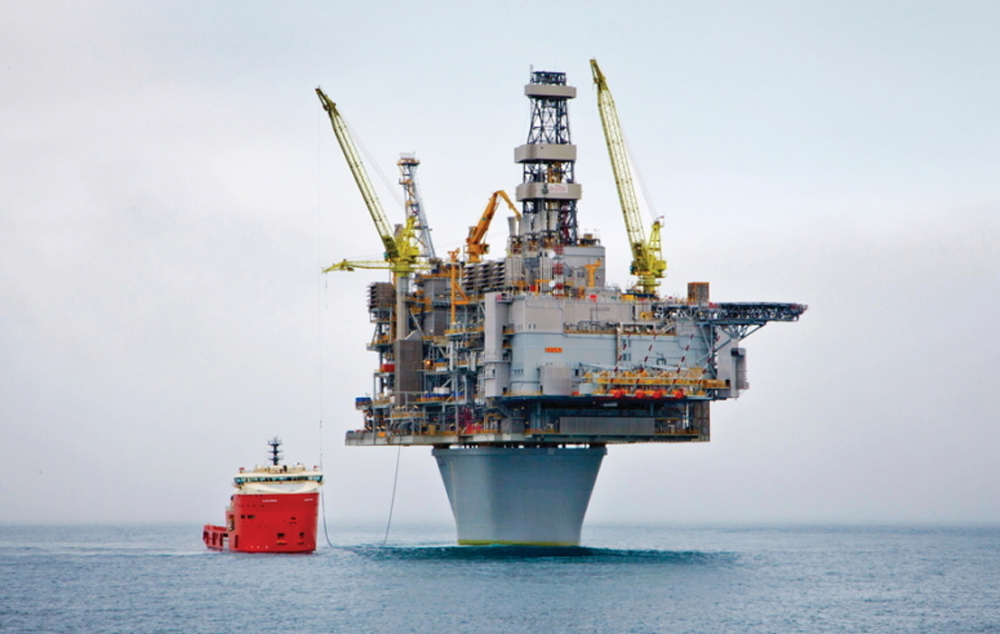
But with the departure of Trudeau last year, and the more rational energy policy of his successor, Prime Minister Mark Carney, a more favorable climate for upstream oil and gas activity is being created for new projects in NL. Additionally, the province will see first oil from the West White Rose (Fig. 1) field project in third-quarter 2026, says operator Cenovus Energy. And production has improved to an average 240,000 bopd during 2025 and now to 297,000 bopd during the first five months of 2026. Let us also not forget that Equinor is expected to make an FID for the much-anticipated Bay du Nord field development project.
To get a more-informed, first-hand account of what is happening in NL’s offshore sector, World Oil Editor-in-Chief sat down with Energy NL CEO Charlene Johnson. That interview follows below.
World Oil (WO): How is the overall health of the NL industry at this point?
Charlene Johnson (CJ): I would say this year, compared to last year, there's definitely a greater sense of optimism. Bay du Nord (Equinor-operated) recently signed their feed agreements with Subsea Integrated Alliance, MBW Offshore. So, that's essentially decision gate two. The benefits agreement got concluded between the government of Newfoundland and Labrador and Equinor, so everything is moving along at the right pace.
We've seen over 80 expressions of interest in our conduit. So, our local supplier companies are busy working on proposals, and it's definitely far better than it was this time last year. And then, of course, the other operators, ExxonMobil, Cenovus and Suncor, they're working hard at maximizing the recovery of the resources that they have here. So, it's really good, finally.
WO: Regarding Bay du Nord, when do you think we'll see the FID?
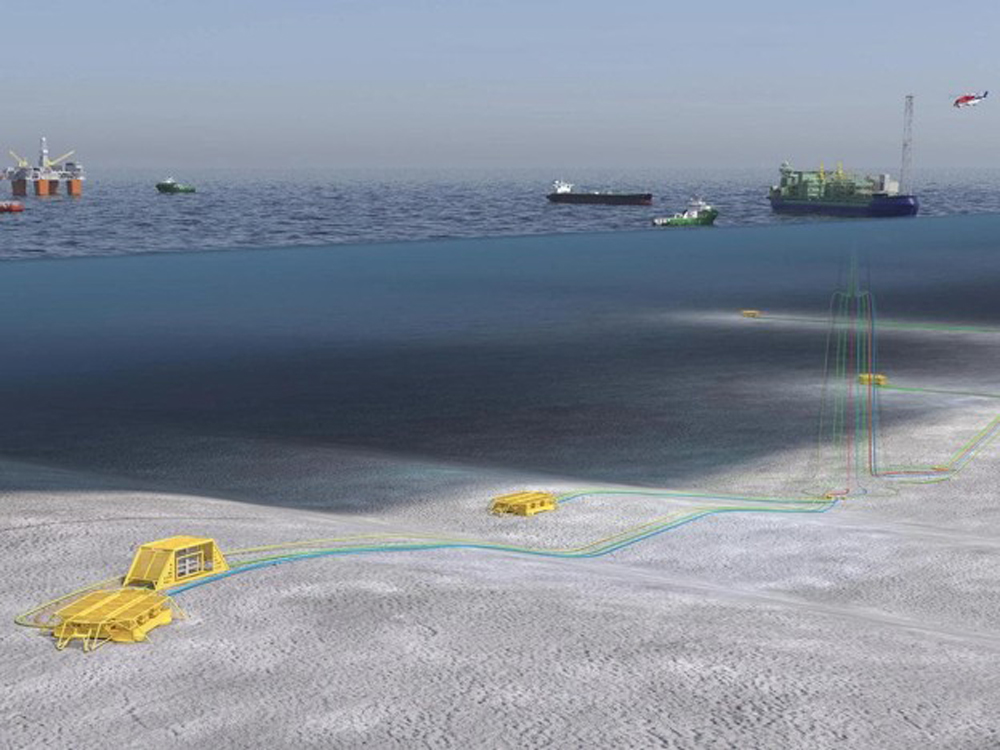
CJ: I believe they said Q1 of 2027, Fig. 2.
WO: And if they proceed with the FID, then we can look forward to a very busy cycle of activity for a while.
CJ: Yes, first oil in 2031, but before you get to first oil, there's a lot of activity, engineering, construction and design. Of course, from 2031 onward, there will be a lot in the operational space for 25 years. And then, of course, there's all the exploration that comes with that around that area, because this is a new basin. First step is getting into the basin, and then it's looking around the basin to develop more oil. So, it's very exciting.
WO: Of course, this will be a little bit different development than say West White Rose, because once again, you're going back to an FPSO.
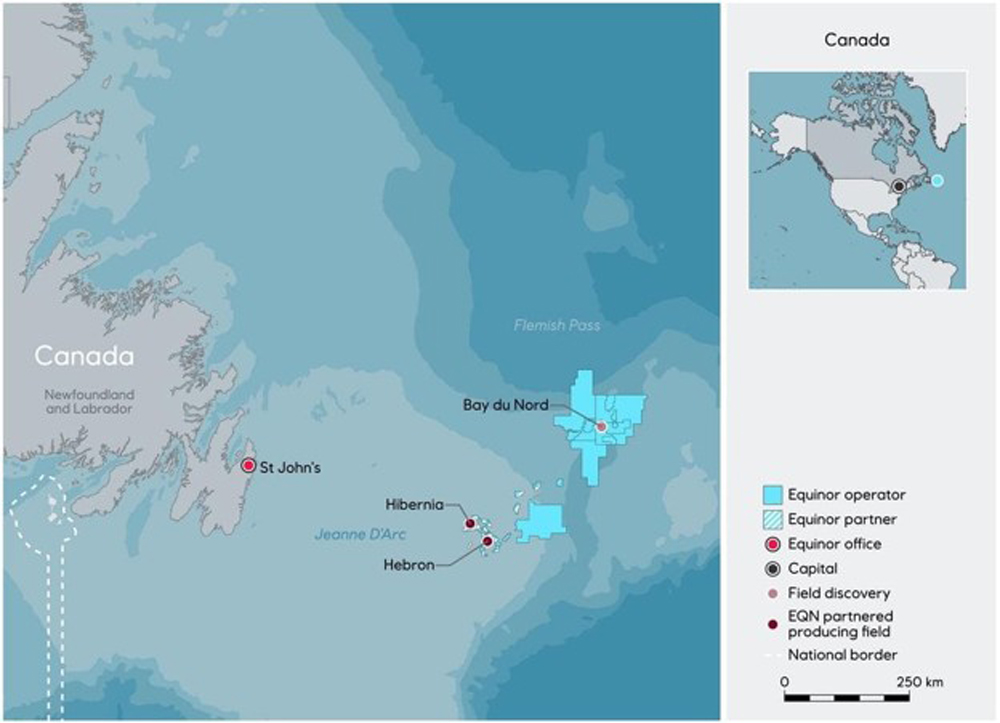
CJ: Yes, it’s very far offshore (Fig. 3), it's very deep water, and it's an FPSO.
WO: If we could talk just a bit about the regulatory environment now, you've had some substantial changes, which is what we would call “progress.” Perhaps you could elaborate on this a little bit.
CJ: Well, yes, we met with Prime Minister [Mark] Carney last Sept. 8th, so he was in government only four months at that point. Myself and my entire board met with him. And the whole focus was on how to get Bay du Nord over the line, but it also was on the whole regulatory regime and how that needs to change. So, right from the top, through to the ministers and regular meetings we have in Ottawa with officials, you can definitely see a difference there.
The focus is on removing barriers, so that we can develop our oil industry. That's a complete 180 from previous years. It's great that they recognize the importance of the resource that we have and that we supply Canada and the world at a time when energy security is such an important topic right now. It’s definitely night and day.
WO: And it also would be preferable, obviously, to try and have as much local content in the projects, both Bay du Nord and other things.
CJ: That's the heart of why Energy NL exists. For our supply chain companies and service companies, we want to ensure that as long as these projects exist, and it's Newfoundland Labrador oil being extracted, that our members are the primary beneficiaries of these projects. Obviously, things like the hull and other components are not going to be built in Newfoundland Labrador. And we're about optimization, and we're realistic that the world is changing, but we need to be a significant player in that, and it's great to see that reflected in the benefits agreement with the government.
WO: There seems to be great interest in the exploration side of things, as well.
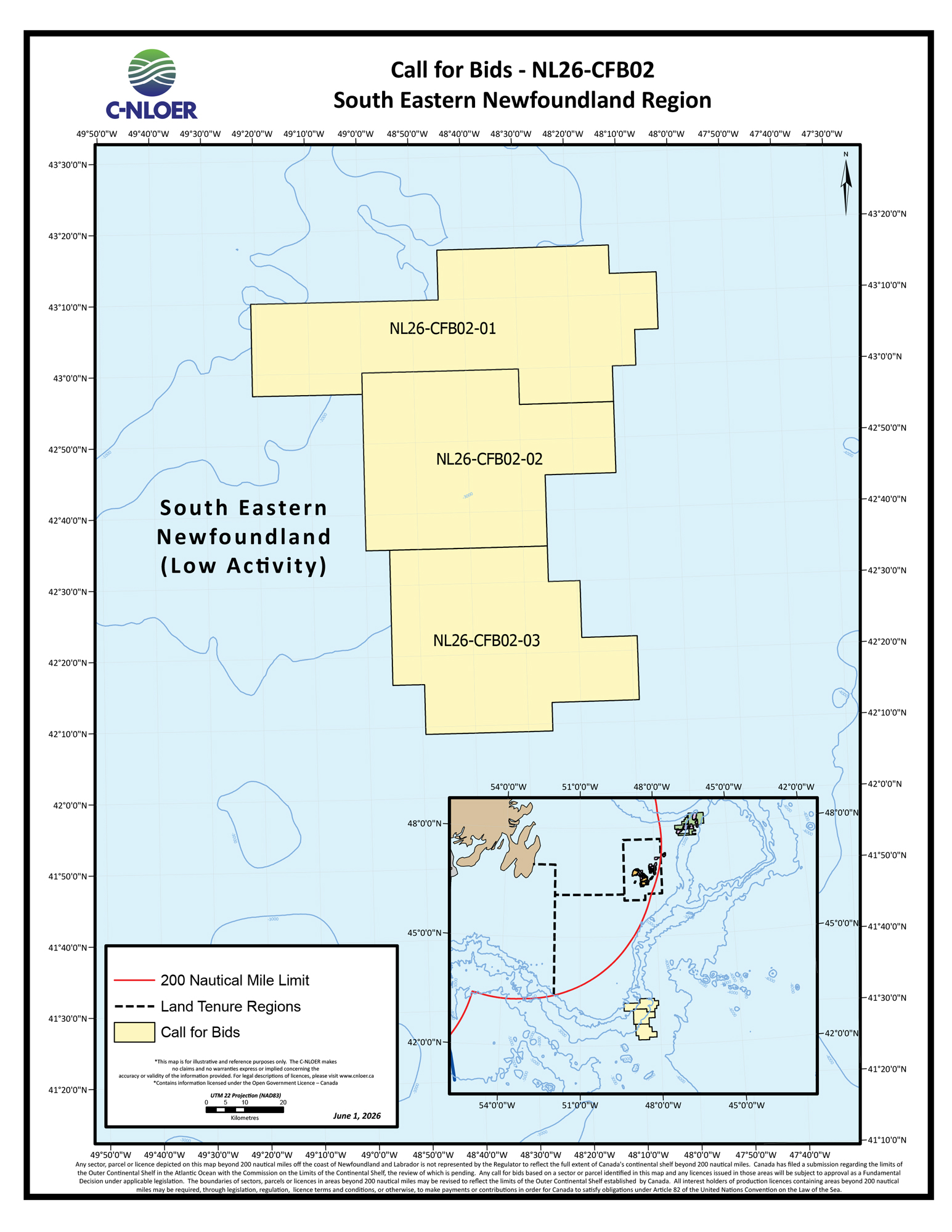
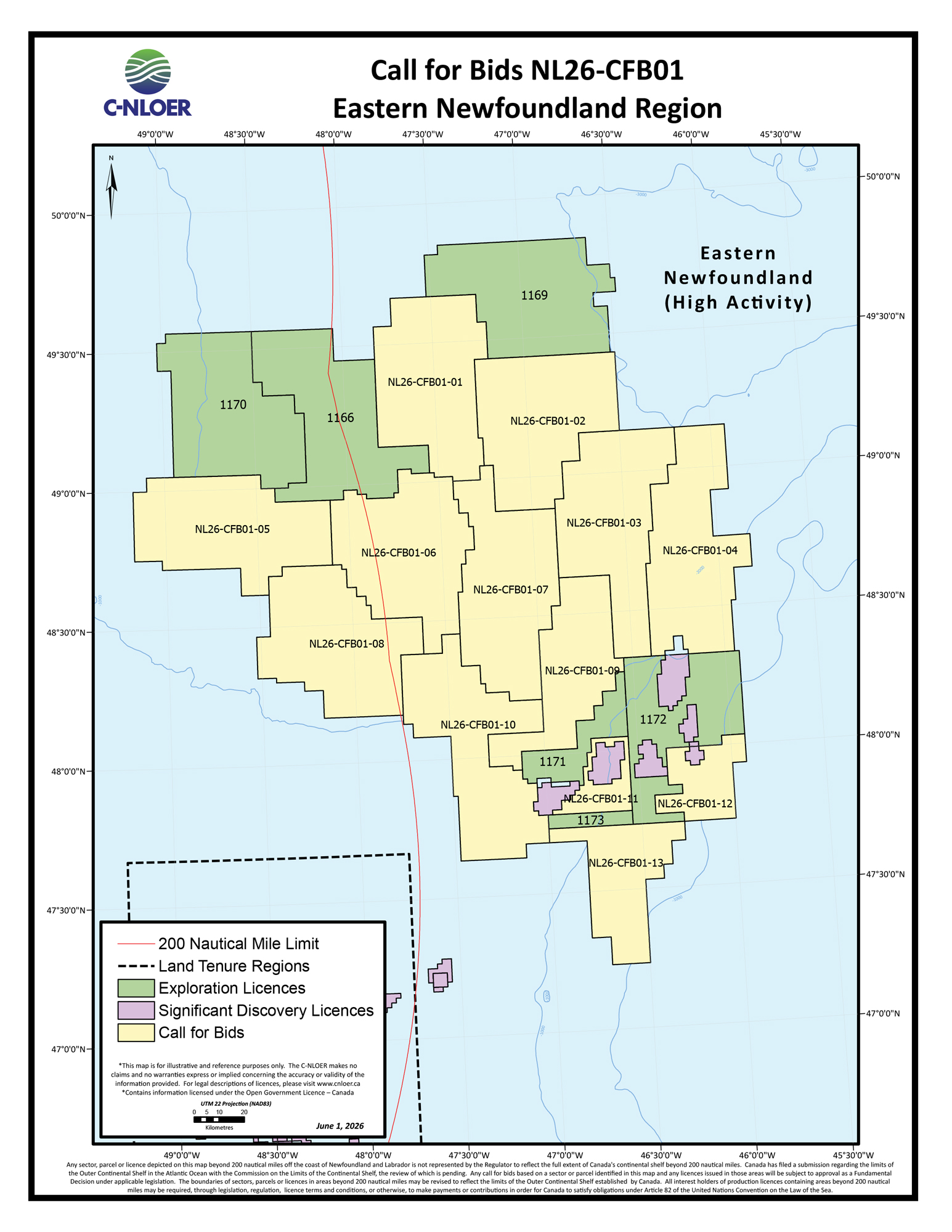
CJ: Well, in the last five years, we haven't had much success in the bidding rounds. Four out of five were zero, and there was one that yielded a little over $200 million. But we're getting phone calls again, and the interest is drumming up again, thanks to the change in leadership at the federal government level. Just in its budget in late April, the provincial government announced another incentive to attract exploration offshore. It is a $90 million Offshore Exploration Fund. We’re beginning to hear from majors that aren't in Newfoundland and Labrador and aren't in Canada right now. So that's why were at OTC in Houston during May, talking to all of those folks and showing them what we have to offer. (Editor’s note: NL has calls for bids on two separate areas, with both having a deadline in November 2026, Figs. 4 and 5.)
WO: The existing fields seem to be doing well.
CJ: Yes, everything seems to be moving along. March was the highest production month for Hebron field (Fig. 6) and, of course, with the elevated price of oil, it's resulting in larger revenues coming to the province right now. Suncor at Terranova field and Cenovus at White Rose field are looking at how to maximize the recovery of those resources. So, everything looks really good.
WO: Do you get a sense that the whole situation in the Middle East may have caused a lot of people in the industry to re-examine where they want to operate and under what conditions?
CJ: When Russia invaded Ukraine [in 2022], we started talking to the federal government then about energy security and, of course, what's even happening in the United States and Iran right now. It just highlights the importance of energy security. And then you have Europe calling Newfoundland and Labrador, looking for oil, because they need jet fuel. Suddenly, it's all eyes on the product that we have, because it's at tidewater, there's no pipelines, and they say, “how quickly can you develop more of it?
Unfortunately, we've had eight to ten lost years, but now we need to quickly make up for that, and everybody is coming together to do just that. And Nova Scotia now, too. I know that you spoke to their Premier during OTC, and they're back in the business of oil and gas, and they just had two bids. We're stronger as a region. Atlantic Canada is doing well, and Canada is doing well. So, we're really looking forward to working with our friends in Nova Scotia next door to develop this industry that's so important to Canada.
CHARLENE JOHNSON is CEO of Energy NL, the primary trade association in East Canada, a position she has held since 2017. Previously, she was a member of the Newfoundland and Labrador House of Assembly for Trinity-Bay de Verd from October 2003 to September 2014. During that same period of time, Ms. Johnson served as a minister in the cabinets of three different provincial premiers. During her time in cabinet, she was Minister of the Environment and Conservation; Minister of Child, Youth and Family Services; Minister of Innovation, Business and Rural Development; and Minister of Finance and President of the Treasury Board. Ms. Johnson graduated from the University of New Brunswick in 2000 with a BS degree in Forest Engineering. She then obtained a Master of Applied Science degree in Environmental Systems Engineering and Management from Memorial University of Newfoundland during 2001. She added to her education with an MBA degree from Heriot-Watt University in 2017.
Related Articles- First Oil: Renewed enthusiasm exuded in Canada and within IPAA (June)
- Nova Scotia’s Premier aims to revive province’s oil and gas activity (May)
- SBM executive sees strong FPSO market on back of deepwater trend (April)
- Unlocking ultra-high-pressure reserves: Why Shenandoah is a milestone for deepwater engineering and advanced chemistry (March)
- A decent year is on tap for Canada, featuring neither boom nor bust (February)
- FPSOs, reliability and gas turbine air intake filtration (February)