Well construction technologies advancing the Permian basin: Industry progress, new benchmarks and field insights
BLANCA ESPINOSA, DANA LASHER and MILENA KALIMULLINA, SLB
Recent advances in drilling fluids, rotary steerable systems, measurement-while-drilling technologies and digital workflows are helping operators meet the growing demands of extended-reach drilling in the Permian basin. Field examples highlight how integrated well construction technologies are improving efficiency, reliability and wellbore quality.
ADDRESSING EVOLVING CHALLENGES IN THE PERMIAN BASIN
Operators today contend with increasingly complex well architectures: longer laterals (stretching 4 mi or more), deep targets, variable pressure regimes and intensifying expectations around cost control and operational continuity. In parallel, there is a rising emphasis on managing environmental risk and bolstering both digital and personnel capabilities. Success in this environment increasingly depends on not just incremental gains, but on adopting solutions that can withstand the region’s unique demands without compromising safety, sustainability or project economics.
EVOLUTION IN DRILLING FLUIDS: PERFORMANCE BY DESIGN
Drilling fluids are fundamental to managing formation interfaces, facilitating efficient drilling and safeguarding wellbore integrity. Recent progress in the Permian has focused on developing primary emulsifiers and fluid systems capable of maintaining rheological stability, especially under the strains of long exposures, fluctuating temperatures and aggressive drilling parameters.
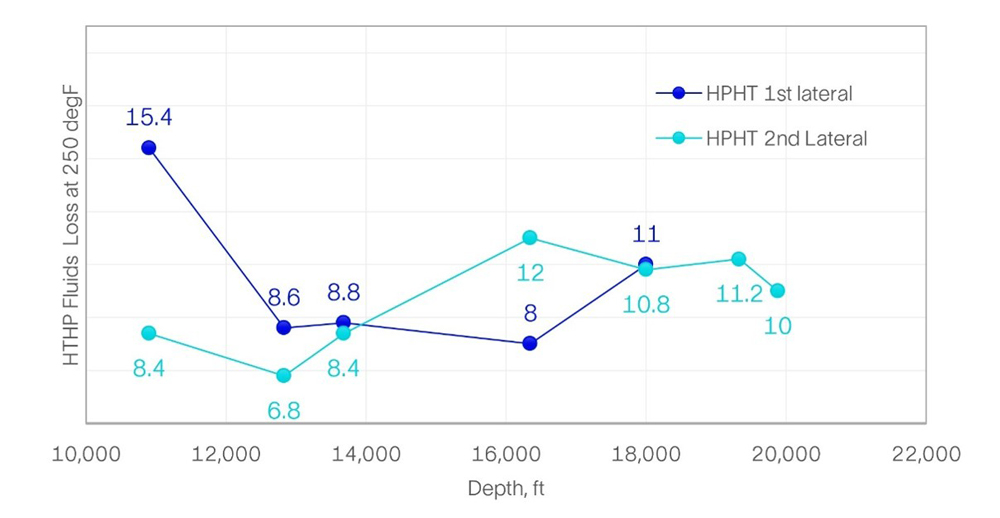
For example, in multiple extended-lateral projects, RheMax P™, a thermally enhanced primary emulsifier designed for high-temperature use within the MEGADRIL™ non-aqueous fluid system was successfully deployed across several wells. Field results demonstrated:
- Stable fluid properties maintained throughout 10,000-ft lateral sections, Fig. 1
- Consistent yield points in the range of 10 to 18 lb./100 ft² for optimal hole cleaning
- Smooth casing runs and the ability to meet well objectives without fluid losses or wellbore instability. [i]
In economic terms, operators reported cost reductions in drilling fluids of up to 37%, compared to previous approaches, while technical performance was preserved across all drilling parameters. Field experience suggests that the transition to next-generation emulsifiers improves fluid integrity and delivers predictable outcomes under challenging well conditions—contributing measurable value in both technical and cost domains.
RELIABILITY IN EXTENDED WELLBORE CONSTRUCTION: ROTARY STEERABLE SYSTEM INNOVATIONS
Precision directional drilling and wellbore placement remain core to maximizing recovery from unconventional reservoirs. Consequently, well profiles have evolved in complexity with laterals extending multiple miles in length and even making complete 180o turns while horizontal.
To meet the demand of these challenging trajectories, the industry has responded with rotary steerable system (RSS) platforms designed to deliver shoe-to-shoe drilling while maintaining a consistently smooth wellbore. Modern RSS optimizes mechanical robustness, extends temperature capabilities and advances steering algorithms to enable tighter curve placement and longer productive intervals.
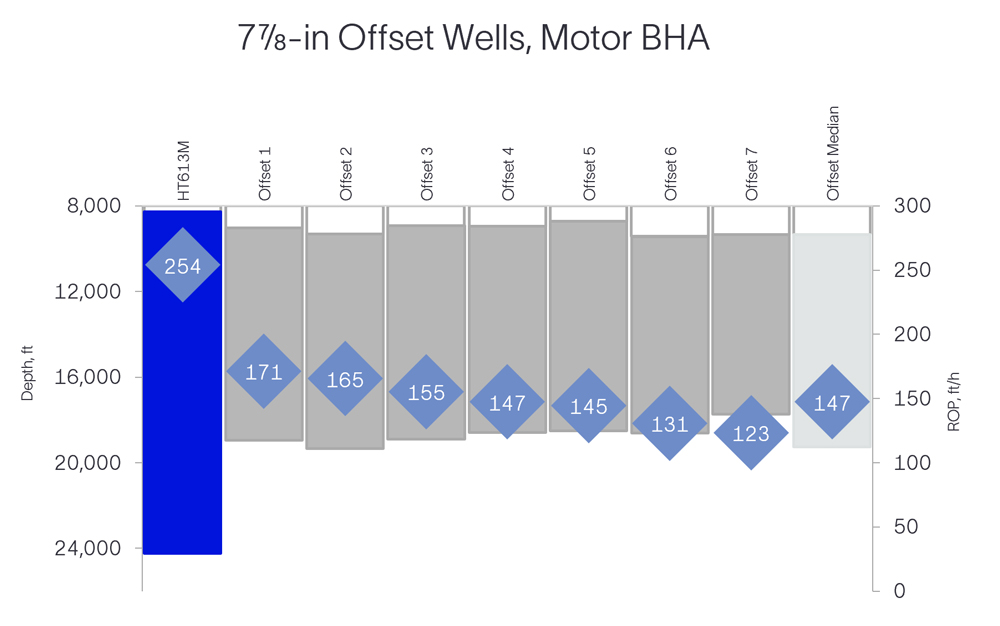
Advanced RSS platforms, such as PowerDrive Max™, have been designed to fulfill these requirements. In comparative field trials performed in the Midland basin, PowerDrive Max™ delivered a 48% ROP improvement across curve and lateral drilling. Curve drilling execution achieved DLS over 12o /100 ft while maintaining low cumulative tortuosity throughout the extended reach lateral. This performance enabled an overall savings of 2.9 days versus offset wells on the same pad, Fig. 2.
Similarly, in the Delaware basin, PowerDrive Max™ deployment delivered with a 43% reduction in curve drilling time, 50% improvement on overall curve and lateral ROP, 18% reduction in cumulative tortuosity, all while extending average run lengths by 60%.
Although such outcomes are not achievable without a robust and reliable RSS, performance assurance is the product of many integrated efforts across drilling planning, real-time monitoring and cross-disciplinary collaboration between rig site and remote operations teams.
This consistent reliability has encouraged broader adoption of advanced RSS technology, which has proven effective in defending against costly unplanned events and supporting aggressive drilling-target objectives.
EVOLUTION IN MWD: RELIABLE PERFORMANCE BY DESIGN
Measurement-while-drilling (MWD) technologies are playing an increasingly important role in Permian well construction, particularly as operators seek greater reliability, stronger survey confidence, and more resilient telemetry in extended-reach and technically demanding wells.
Platforms, such as TruMax,™ address these needs through a combination of telemetry, power, and measurement capabilities designed to improve drilling continuity and downhole visibility. An anti-jamming pulser design helps maintain signal integrity in conditions where legacy mud-operated pulser systems may be more prone to communication disruption. The integration of downhole power generation further expands operational flexibility by reducing battery exposure, supporting safer execution and supplying the power required for additional measurements, including resistivity services.
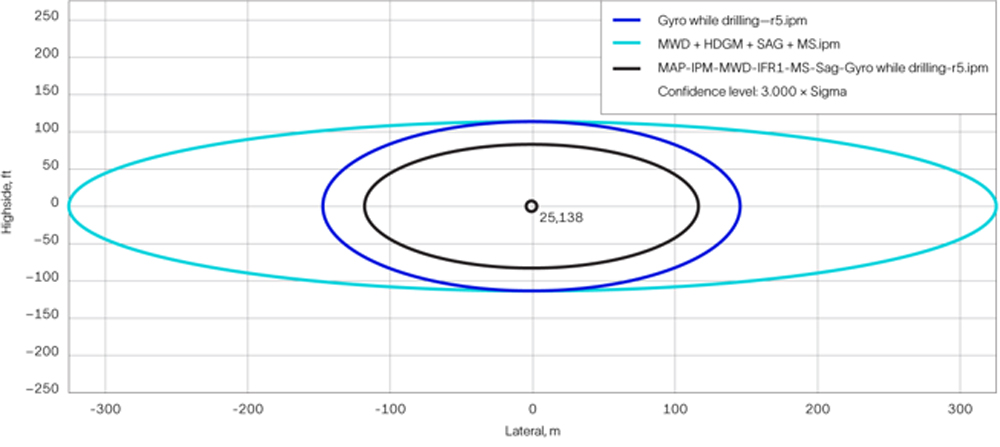
This approach enables a more flexible MWD configuration, capable of supporting broader LWD requirements where sustained downhole power is increasingly important. Additional capabilities—including dual telemetry with EM proximity, gyro survey support and 16-bin azimuthal gamma ray measurement—enhance survey quality, improve wellbore positioning and strengthen formation interpretation while drilling, Fig. 3. Together, these features help operators reduce drilling uncertainty, improve reliability in complex sections and maintain consistent performance as well architectures continue to evolve.
FLUID DESIGN FOR ULTRA-LONG LATERALS: MANAGING NEW COMPLEXITY
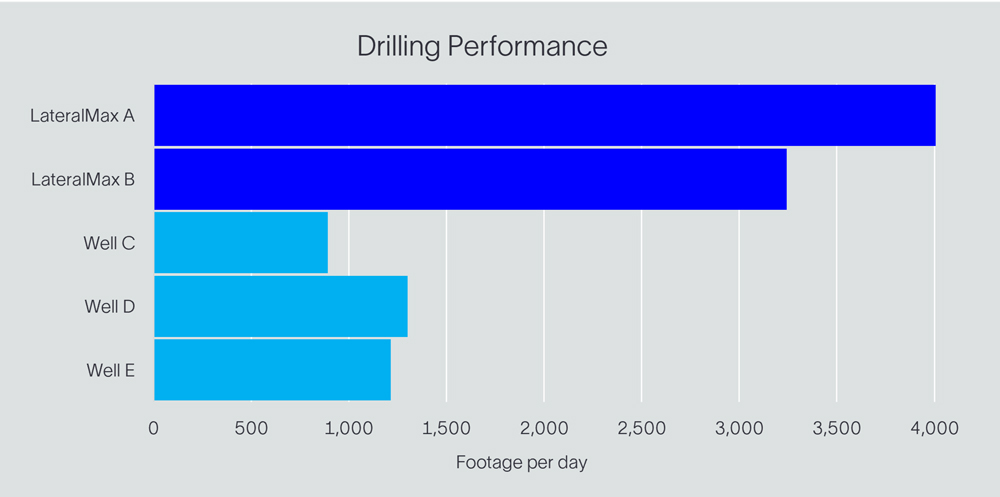
The drive toward 4-mi (and longer) lateral wells has brought new attention to the importance of fluid system design. Advances in this area have enabled operators to address challenges, such as elevated equivalent circulating density (ECD), high pressure and hole cleaning in previously problematic intervals.
One Permian application involved the deployment of LateralMax™, an engineered fluid system tailored for ultra-long laterals, Fig. 4. This design focused on maintaining cuttings transport and minimizing pressure fluctuations. Field outcomes included:
- Successful drilling of 4-mi laterals in high-risk zones
- Wells met or exceeded operational objectives and completed under AFE targets
Met targets for days on well and cost per foot, even as complexity increased.
These results underscore the importance of purpose-built fluid methodologies across the life of the well, especially as assets mature and lateral strategies continue to evolve.
WELL PLACEMENT AND OPERATIONAL EFFICIENCY: TRAJECTORY CONTROL TOOLS
Improvement in downhole trajectory control, including dogleg severity management and ROP optimization, is another axis of progress in Permian well construction. Modern RSS and trajectory control technologies now enable tighter curve placement and longer productive intervals:
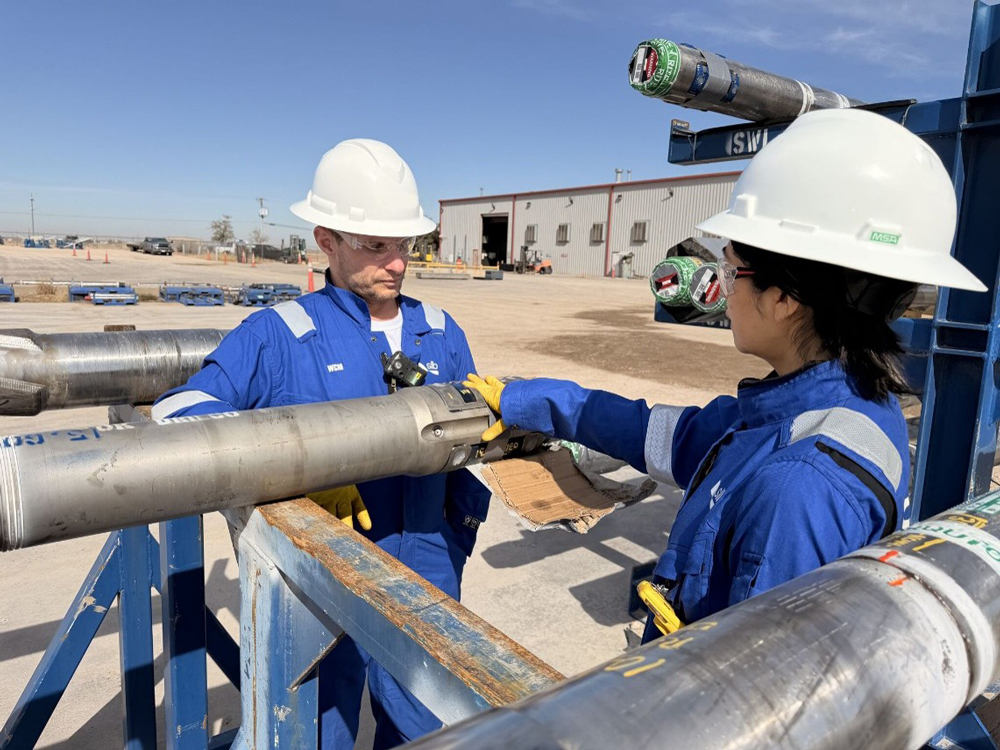
In comparative field trials, the PowerDrive Max™ system achieved savings of as much as 2.9 days versus offset wells and up to 48% improvements in ROP in the 7⅞-in. section, with dogleg severity values tailored to the formation (e.g., 12°/100 ft). Multiple wells have shown tight control throughout lateral drilling: For instance, two separate projects recorded DLS values of 9°/100 ft and 13°/100 ft in curves, with stable, low DLS maintained through laterals.
Such outcomes are not the product of a single technology, but rather integrated efforts across drilling planning, real-time monitoring, and cross-disciplinary collaboration between rig site and remote operations teams, Fig. 5.
INDUSTRY-WIDE LESSONS AND THE IMPORTANCE OF INTEGRATION
Examining these case studies and project deployments, several industry trends become clear:
- Reliability and repeatability are essential. Consistent, high-reliability solutions reduce risk exposure and nonproductive time, helping operators achieve delivery targets. This consistency becomes even more critical when wells are drilled with the most challenging parameters—longer laterals, tighter windows, higher loads, elevated temperatures and aggressive ROP targets—where small performance deviations can quickly compound into costly interruptions, wellbore quality issues, or missed operational benchmarks.
- Performance is a multi-domain metric. Technical optimization—higher ROP, reduced fluid losses, controlled ECD—must go hand-in-hand with financial objectives.
- Digitalization enables resilience. Field examples routinely highlight how planning tools, real-time dashboards and remote support amplify the effectiveness of well construction teams.
- Sustainable design matters. Environmentally benign fluids and energy-efficient systems are gaining traction, aligning with operator and regulatory expectations for lower emissions and minimized footprint.
LOOKING FORWARD: COLLABORATION, DIGITAL TRANSFORMATION AND SUSTAINABLE PROGRESS
The Permian continues to be a proving ground, rapidly translating advancements into operational realities. Some future-shaping themes emerging from current trends include:
- Increased adoption of digital solutions for predictive maintenance, remote supervision and drilling optimization
- Expansion of tailored fluid systems that anticipate specific well designs and operational contingencies
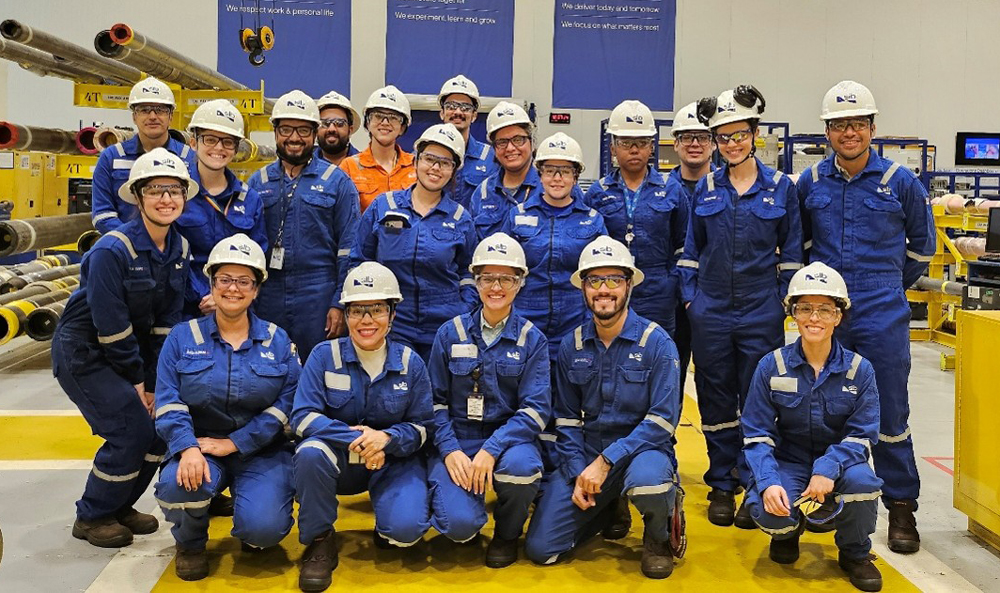
- Broader cross-operator collaboration on best practices, benchmark sharing and continuous improvement strategies, Fig 6.
As operators and service companies pursue ambitious lateral programs, these developments collectively hold promise for even safer, more efficient and sustainable well delivery in the years ahead.
INTEGRATING TECHNOLOGY FOR THE NEXT PHASE OF PERMIAN PERFORMANCE
As Permian well designs continue to stretch operational limits, the next wave of performance gains will likely come less from stand-alone tools and more from how technologies are combined into an integrated well construction system. Longer laterals, tighter drilling windows, higher mechanical loads and more aggressive drilling schedules require a coordinated approach that connects directional drilling, downhole measurement, fluid behavior, bit design and digital execution.
In this environment, the value proposition shifts from simply drilling faster to drilling with greater certainty—placing the well accurately, maintaining a smoother trajectory, managing hydraulic constraints and reducing the likelihood of unplanned events that can erode economics.
This is especially important in unconventional development, where repeatability across pads is essential. Each well may present unique formation response, pressure behavior or cuttings transport challenges, but the operating model depends on the ability to transfer lessons rapidly from one run to the next.
Technologies, such as high-performance RSS, resilient MWD platforms, engineered low-solids fluid systems and tailored bit designs, are increasingly being evaluated not only by individual performance metrics, but by their combined effect on days on well, cost per foot, casing and completion readiness and overall wellbore quality. The smoother the wellbore and the more stable the drilling environment, the easier it becomes to sustain high ROP while protecting the integrity of the bottomhole assembly and improving the probability of a successful shoe-to-shoe run.
Digital enablement is another important part of this evolution. Real-time drilling advisory workflows, remote operations support, and performance monitoring centers allow drilling teams to detect dysfunction earlier, optimize parameters more consistently and apply field learnings at basin scale.
In the Permian, where pad drilling programs generate large volumes of comparable data, this capability can help identify patterns in vibration, torque and drag, ECD behavior, steering response and fluid stability. The result is a more proactive operating model—one in which teams can adjust before small inefficiencies become larger operational disruptions. This is particularly relevant for extended-reach laterals, where the consequences of poor hole cleaning, excessive tortuosity or telemetry interruptions can compound quickly over long intervals.
The broader lesson from recent Permian deployments is that technical performance and commercial performance are now inseparable. A fluid system that improves ECD management can support higher drilling efficiency and cleaner casing runs. An RSS that delivers higher dogleg output at elevated ROP can shorten curve time while preserving lateral quality. A more robust MWD platform can improve survey confidence and reduce interruptions. When these capabilities are aligned through planning, execution and digital feedback loops, they create a performance system that is more resilient than any single component.
For operators, this integrated approach provides a pathway to pursue longer, more complex wells while maintaining discipline around cost and reliability. For the service sector, it reinforces the importance of developing technologies fit for the specific realities of unconventional drilling—high-volume programs, demanding economics and a constant push toward greater efficiency. In the Permian, the benchmark is no longer whether technology can perform in isolation, but whether it can help deliver repeatable, high-quality wells at scale.
CONCLUSION
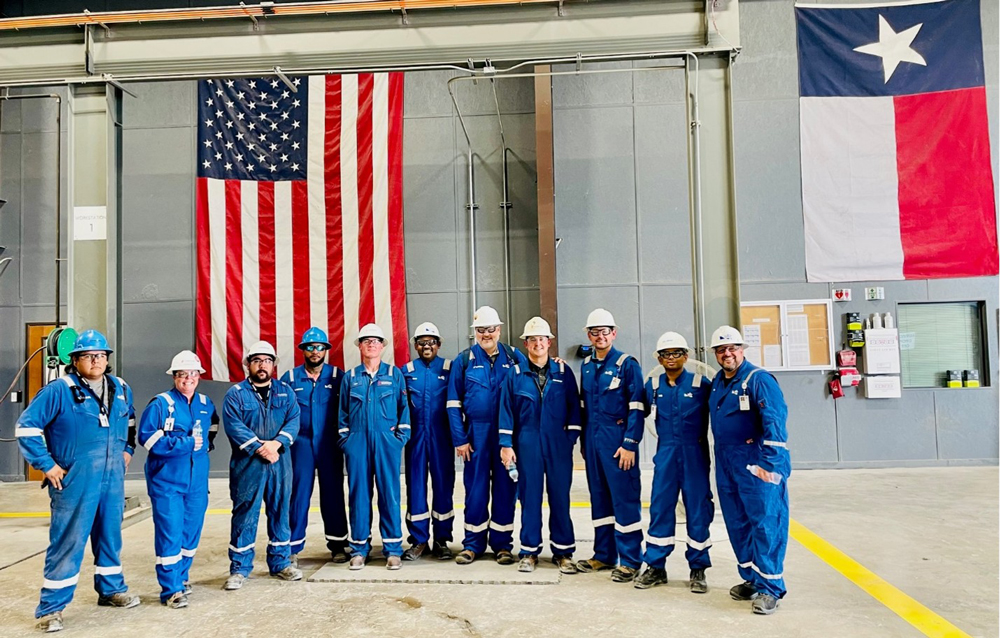
Progress in the Permian basin is not the result of isolated technological leaps, but of steady, cross-disciplinary advancement—bringing together fluid chemistries, steerable systems, monitoring platforms and digital workflows. Technologies, such as next-generation primary emulsifiers, modular RSS platforms and advanced fluid management systems—deployed by SLB and others—continue to raise the bar for performance and reliability, delivering measurable value to the entire basin, Fig. 7.
By focusing on reliability, integration and ongoing digital transformation, the well construction sector is positioned to meet the challenges and expectations of a new era in unconventional development—setting examples that will shape future operations, both in the Permian and beyond.
BLANCA ESPINOSA is the Global Product Champion for SLB’s Chemistry Factory and Reservoir Drill-in Fluids, based in Sugar Land, Texas. Ms. Espinosa holds a bachelor’s degree in industrial engineering and has extensive experience in drilling and completion operations across more than seven countries and a diverse range of drilling environments. She collaborates closely with engineering and operations teams to design and implement customized fluid systems that address evolving drilling challenges, from wellbore stability to formation damage mitigation. Ms. Espinosa's field-focused approach helps turn innovative chemistries into effective solutions that improve drilling performance and support successful well delivery.
DANA LASHER is the Global Product Champion for Rotary Steerable Systems (RSS) at SLB. Based in Sugar Land, Texas, he manages SLB’s RSS portfolio, fostering collaboration between engineering, operations, and customers to deliver fit-for-purpose technology innovation. He holds a bachelor’s degree in physics. With 18 years in operations, Mr. Lasher has vast experience working directly with customers and managing SLB directional drilling businesses in unconventional and offshore locations.
MILENA KALIMULLINA is the Global Product Champion for Measurement While Drilling (MWD) at SLB, based in Sugar Land, Texas, where she manages technology portfolios for advanced downhole telemetry and MWD solutions. With a strong background in engineering, operations, and global product management, Ms. Kalimullina has extensive experience leading technology development, commercialization, and product adoption across diverse markets. She holds a bachelor’s degree in petroleum engineering and has over 14 years of experience in the oil and gas industry.
Related Articles- Maximizing horsepower delivery in modern frac fleets through advanced pump design (July)
- Extended-length gas separation improves ESP stability in slug-prone Permian wells (June)
- Shaletech Report: Permian activity remains steady with growth through efficiencies (April)
- Before OPEC, there was Texas: A better path for Venezuela’s oil revival (February)
- Dynamic kill operations in a legacy Texas oil field (December 2025)
- FlexRobotics hits the Permian: H&P’s robotic rig makes its field debut (December 2025)