CERAWeek Day 1: DOE’s Wright clarifies and expands on U.S. energy direction
(WO) - CERAWeek by S&P Global 2026 got off to a strong start on Monday morning, with its first session featuring U.S. Secretary of Energy Chris Wright. In a fast-paced, 20-minute session, Wright articulated Trump administration policy on a wide variety of topics pitched to him by interviewer Dan Yergin, Chairman of CERAWeek and Vice Chairman of S&P Global.
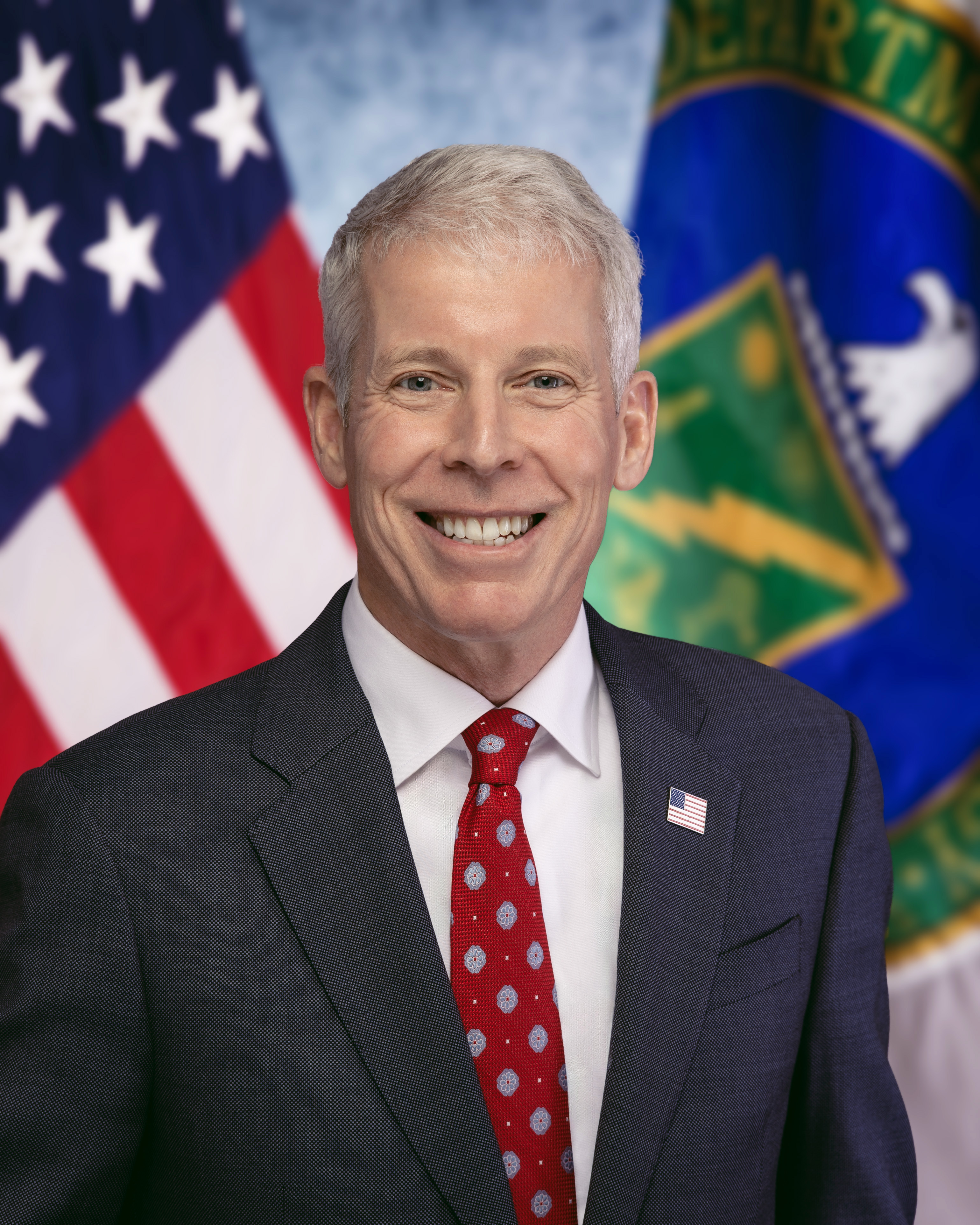
One of the first things that Yergin asked Wright about was what he thought DOE had accomplished in his first year. He replied that DOE was in a very different place, compared to early last year. “You might assume that I'm talking about geopolitics,” mused Wright. “Yes, a lot has changed. What I'm thinking about is how people think and talk about energy…I believe that we have made great progress in restoring honesty and candor in the dialogue about energy, what it is and what it isn't. The truth is simple, energy is life and the world needs massively more of it. President Trump's goal from day one was to get rid of the nonsense and restore common sense. That means turbocharging American energy production, including electricity that's been relatively stagnant for a few decades.
“Surging energy production will drive down costs for Americans, drive reshoring of manufacturing back to our country, and that in turn will drive up wages. Lower costs, higher wages. In short, that's the economic agenda. The plan is to strengthen our economy, our national security, and lead the world to get AI, a truly transformative technology.”
Natural gas. Taking his cue from Yergin, the Secretary switched gears and talked about the role of natural gas. “Last year I led off by saying we ended the Biden cause on LNG banning,” observed Wright. “Since then, over 18 Bcf a day of new permits have been approved for LNG exports out of our country. That amount alone, permitted in the last 13 months, would make America by far the world's largest exporter of natural gas.
“America's superpower is natural gas,” continued Wright. “It is our largest and cheapest source of electricity, it is a main heating fuel. It is our main industrial fuel, our petrochemicals, fertilizer. Natural gas is also the key to the United States to lead in AI and make it economically compelling to bring back energy-intensive manufacturing to our country. Today, pipeline-delivered natural gas is less than 50 cents per gallon of diesel. This is compelling. Oil remains the most important source of energy in the world. It continues to slowly lose market share to a less expensive and more abundant natural gas. But nothing matches the energy density and flexibility of oil. No oil, no modern world…”
Wright continued, “Natural gas this year produced 47% more electricity during the week of firm than it did last year in late January. Coal is up 24%. When demand goes up, supply has to go up. Nuclear was flat, and that's what nuclear does. It's unimpacted by the weather, it's rock steady, but it's not great at being variable. It was flat in most cases. Wind power was down 40% in the week of peak demand versus what it delivered last year. That's not helpful…
More exclusive CERAWeek coverage: Meeting energy needs in complex markets
Middle Eastern situation. Yergin asked Wright about how the Middle Eastern war is affecting energy policy and how the Trump administration is looking at oil and potential repercussions.
“…this is a conflict that we simply couldn't kick down the road one more administration,” maintained the Secretary. “When this regime and Iran came to power, the first thing it did was take America's hostages. Then it blew up a few hundred Marines in Beirut, Lebanon. Then it fired missiles at tankers during the 1980s. It supplied IEDs to kill thousands of Americans... And of course, it launched that October 7th attack on Israel from Gaza.
“This is a regime that has used its increasing power to trouble energy markets and destabilize its region. And, of course, it's [built] ever-better missiles and a huge conventional arsenal to protect its core goal, which is to build a nuclear bomb. This is just not acceptable. I'm not in a world going forward in the long run with a heavily missile-endowed Iran that has nuclear weapons. The world cannot live in that scenario, and the Trump administration is not ready to kick that can down the road.
Relief for Middle Eastern constricted oil flows. Not surprisingly, Yergin asked the Secretary about the U.S. releasing oil from its Strategic Petroleum Reserve, as part of an effort coordinated with the International Energy Agency. Yergin wanted to know how fast strategic stocks are flowing into the market.
“United States oil from our stock started flowing last Friday afternoon,” declared Wright. “I saw the press on it, saying ‘they can't do it for three weeks, it's never been done before.’ But oil started to flow out of U.S. stocks last Friday after noon. Japan is also moving quickly. Some nations are moving more slowly. Some nations don't even have oil and gas stocks. But this is what the IEA was created for. It was used four years ago to lower gasoline prices to help election results. That's not what the IEA, that's not what the strategic petroleum reserves are for. This is what they're for.
Yergin followed up, “And the volume that comes out of the SPR, what is the level?” “It's going to be between a million and a million-and-a-half barrels a day at a U.S. dollar,” answered Wright.
Storage philosophy. Yergin also quizzed Wright on the long-term impacts of storage phobia on energy supply, and how the market's leading the change. “Yeah, if you shrink storage permanently, that ends up a being a premium in prices that makes markets less stable,” opined the Secretary. “So, another difference from the release in 2022 is we didn't sell the oil like they did. They just sold the barrels and then they were gone. We're actually engaging in swap contracts. We're releasing barrels today, the first deals we made. For every barrel we release, we're going to get back more than 1.2 barrels of oil that'll go back into the reserve next year. So, at the end of this conflict, at the end of next year, we'll have the means to be more [responsive] in the SPR than we are today.
Thoughts on Venezuela. Yergin proceeded to get Wright’s “takeaway” on Venezuela. “This is an experiment in geopolitics,” said a thoughtful Wright. “Can we take a country that for more than 25 years has skidded downhill into criminality, poverty, drug running? Nine million people left Venezuela. And for the first time in history, six million of those nine million left a relatively poor country and moved to poorer countries in South America. That's how bad the situation was in Venezuela. But it's impacted our hemisphere, it's impacting the United States, gangs, drugs, and guns coming in quantities to our country. We figure that has to end. There have been sanctions on Venezuela and the world for years. We just enforced an actual quarantine that changed the U.S. Leverage to drive Venezuela towards improved behavior. It's not a Jeffersonian democracy yet, but it's meaningfully better than it was three months ago…and oil production is up 200,000 barrels a day already.”
In the course of the conversation, Yergin then asked Wright if he was able to have discussions with them about what they need to do in terms of terms of companies that can invest. “We did,” answered the Secretary. “They had quickly, on their own, even before I arrived, changed the hydrocarbon law, rewrote a new law, and passed it through their assembly. So, they're moving quickly. I want some feedback that the law is much improved from where they were before, but it still has some concerns for me about the road to international arbitration.”