Guyana & Suriname: The new Petro-State corridor takes hold
GORDON FELLER, CONTRIBUTING EDITOR
Twelve months ago, Guyana was already the world's fastest-growing economy, and Suriname was preparing to sanction its first offshore oil project. Since then, both storylines have accelerated, and a third has intruded on both of them: the abrupt U.S. military removal of Nicolás Maduro's government in Venezuela, which has reshaped the risk calculus for every operator, insurer, and financier active on the northeastern shoulder of South America. What was a story about geology and FPSOs a year ago is now also a story about geopolitics, sovereign wealth management, and the durability of two young democracies managing an extraordinary windfall.
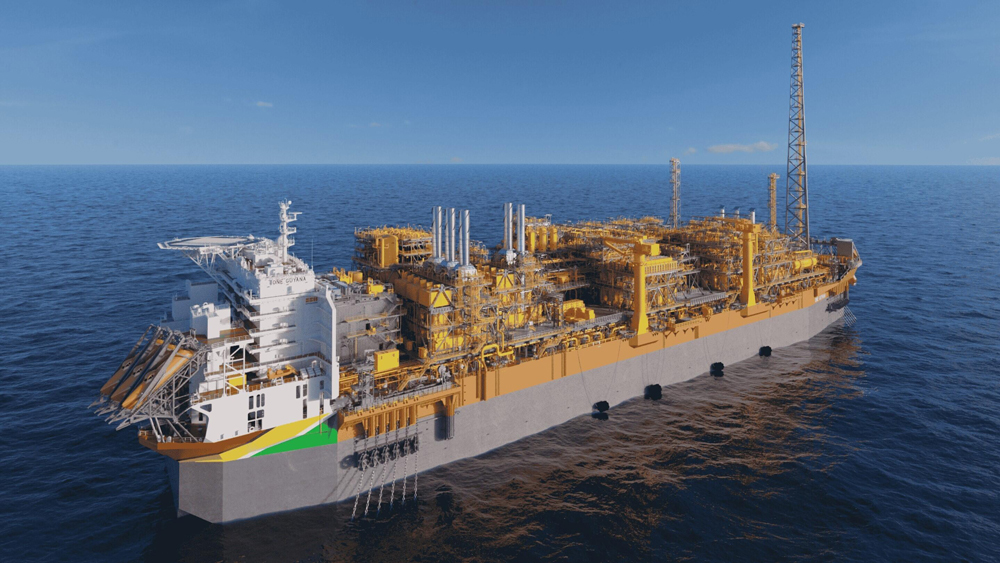
This piece examines what actually happened across Guyana and Suriname's oil and gas sectors over the past 12 months, assesses what is likely over the next 12, and works through, block by block, the policy shifts, capital commitments, and infrastructure programs defining the corridor.
GUYANA: PRODUCTION MILESTONES AND MATURE, CAUTIOUS POLITICS
Guyana's offshore output kept climbing through the year. ExxonMobil and its Stabroek Block co-venturers announced in November 2025 that daily production had reached 900,000 bopd, a milestone the company said came just months after the successful startup of Yellowtail, Guyana's fourth offshore project. This also meant that Yellowtail achieved its initial annual average production capacity of 250,000 bopd (ExxonMobil, Nov. 12, 2025), Fig. 1.
ExxonMobil Guyana President Alistair Routledge hailed the milestone, telling Stabroek News that the company continues to "safely deliver industry-leading performance, providing the oil and gas the world still demands." By late February 2026, daily output had climbed further, to 926,550 bpd (Fig. 2), securing Guyana's place as South America's second-largest oil producer, behind Brazil and ahead of Venezuela (OilPrice.com, Feb. 28, 2026), an extraordinary gain for a nation that produced no oil at all before December 2019.
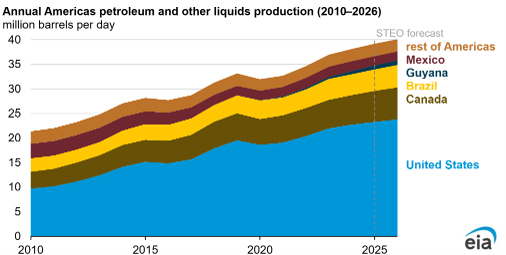
The Stabroek Block partnership (ExxonMobil, 45%; Hess/Chevron, 30%; and CNOOC, 25%) has now committed more than $60 billion to develop seven government-sanctioned projects (ExxonMobil, Nov. 12, 2025). Uaru and Whiptail, the fifth and sixth projects, are each expected to add roughly 250,000 bopd and begin operations in 2026 and 2027 respectively. Hammerhead, the seventh, reached final investment decision in September 2025 and is set to add approximately 150,000 bopd when production begins in 2029, bringing installed capacity on the block to 1.5 million bopd (World Oil, Sept. 22, 2025).
Announcing the sanction, Dan Ammann, President of ExxonMobil Upstream Company, said,"We continue to set a new standard in Guyana, advancing an impressive seventh project just 10 years after first discovery. In collaboration with the people and government of Guyana, we've helped build a thriving new oil-and-gas industry in the country that is creating jobs, supplier opportunities, profits and follow on investments."
An eighth project, Longtail, remains under regulatory review, and ExxonMobil has separately filed with Guyana's Environmental Protection Agency for a sweeping new exploration and appraisal campaign—up to 35 exploration and appraisal wells across four offshore prospect areas, expected to run from second-quarter of 2028 through the end of 2033 (Brazil Energy Insight, June 16, 2026). Guyana's Minister of Natural Resources, Vickram Bharrat, told OilNOW that the campaign is aimed at evaluating existing discoveries that could become future developments rather than searching for new resources, citing Longtail and Haimara as prospects requiring further appraisal before development decisions can be made. It’s a clear signal the company sees years of running room left in the Stabroek license area.
The defining domestic event of the past year was Guyana's September 2025 general election. President Mohamed Irfaan Ali's People's Progressive Party/Civic won a second term decisively, taking 36 of 65 National Assembly seats, an increase of three from 2020, with over 55% of the popular vote and victories in eight of the ten regions. The more consequential shift was on the opposition benches: We Invest in Nationhood, a party founded only three months before the election by businessman Azruddin Mohamed, surged to second place, displacing the long-dominant APNU/PNCR as the main opposition for the first time since that party's founding.
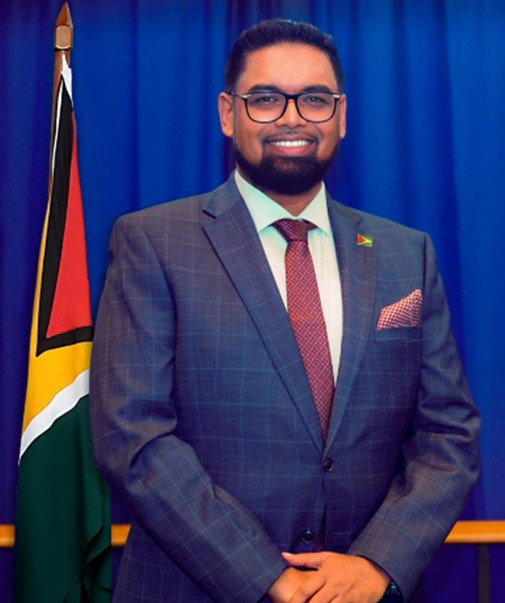
In his Sept. 7 inauguration address, Dr. Ali (Fig. 3) described a vision of Guyana "where oil fuels ambition; sugar and rice sustain; bauxite, gold and diamonds anchor prosperity; and fertile lands feed a region" (AS/COA, Sept. 9, 2025). Vice President and PPP General Secretary Bharrat Jagdeo, sensing the outcome the day before official results, told local media, "That's very clear from the trend you're seeing" (guyananews.org).
Notably, and reassuringly for investors, the election did not feature a serious push from either major party to renegotiate ExxonMobil's Stabroek Block contract. This is a debate that has simmered in Guyanese civil society since 2019 over royalty rates and profit-sharing terms, even as WIN's Mohamed campaigned on redistributing oil wealth more broadly. Post-election, the government has continued directing oil revenue into infrastructure and services, rather than revisiting contract terms.
VENEZUELA: FROM EXISTENTIAL THREAT TO DORMANT RISK
The single largest shift in the region's risk profile came from outside Guyana's borders entirely. For over two years, Venezuela's claim to the Essequibo region—roughly two-thirds of Guyana's landmass, and the maritime area overlying much of the Stabroek Block — had been the sector's dominant tail risk. Nicolás Maduro's government had declared Essequibo a Venezuelan state, deploying naval vessels near ExxonMobil's offshore facilities, and threatening annexation.
That risk was transformed on Jan. 3, 2026, when the U.S. launched a special military operation that captured Venezuelan President Nicolás Maduro and his wife, Cilia Flores, and flew them to the United States to face narco-trafficking charges. During a press conference at his Mar-a-Lago home in Florida, President Trump said, “We're going to run the country until such time as we can do a safe, proper and judicious transition. And it has to be judicious because that's what we're all about. We want peace, liberty and justice for the great people of Venezuela."
Trump was explicit that oil access was central to the operation's logic, saying U.S. oil companies would "go in, spend billions of dollars, fix the badly broken infrastructure... and start making money for the country." Venezuelan Vice President Delcy Rodríguez was sworn in as president under a Supreme Tribunal order and, within days, her government pivoted toward cooperation with Washington on oil trade.
For Guyana and its offshore partners, the implication is significant. Allen Good, Director of Equity Research at Morningstar, told CNBC, “With Venezuela already in the U.S.'s crosshairs and Exxon the largest operator in Guyana, any aggression would likely have elicited a U.S. response. Now, with the U.S.'s intent to control the country, any action by Venezuela becomes even more remote, removing a nuisance for Exxon and Guyana."
Secretary of State Marco Rubio, who had already warned Caracas of consequences for any move against Guyana or ExxonMobil, is reported to have reaffirmed continued U.S. support for Guyana's sovereignty and territorial integrity in the operation's aftermath (CNBC, Jan. 12, 2026). Risk analysts caution this is a pause, rather than a legal resolution—the ICJ case Guyana filed remains before the court—but for underwriters and lenders pricing Guyana risk, the practical, near-term threat has receded sharply.
SURINAME: FROM PROMISE TO CONSTRUCTION
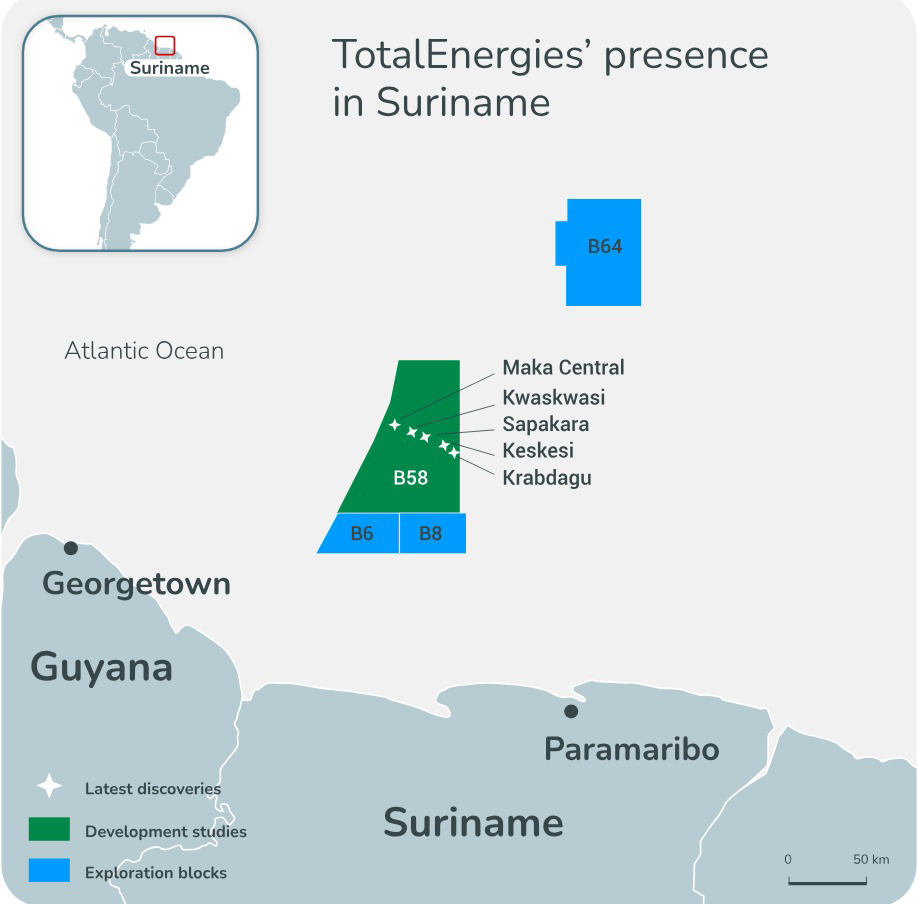
Suriname's defining project, TotalEnergies-operated GranMorgu on Block 58 (Fig. 4), has spent the past year converting a 2024 final investment decision into visible steel and concrete. The project will develop the Sapakara and Krabdagu discoveries, located roughly 150 km (93 mi) off the Suriname coast, and holding recoverable oil reserves estimated at over 750 MMbbl, centered on a 220,000-bpd FPSO, with total investment of around $10.5 billion and first oil expected in 2028.
Announcing the FID, Patrick Pouyanné, Chairman and CEO of TotalEnergies, said, "I am very pleased to launch today the GranMorgu project alongside our partners Staatsolie and APA, and I sincerely thank the State of Suriname for its strong support. Building on TotalEnergies' pioneering spirit, this landmark project marks the first offshore development in the country and capitalizes on our extensive expertise in deep offshore innovation. Launched only a year after the end of appraisal, GranMorgu fits with our strategy to accelerate time-to-market and develop low-cost and low-emission oil projects."
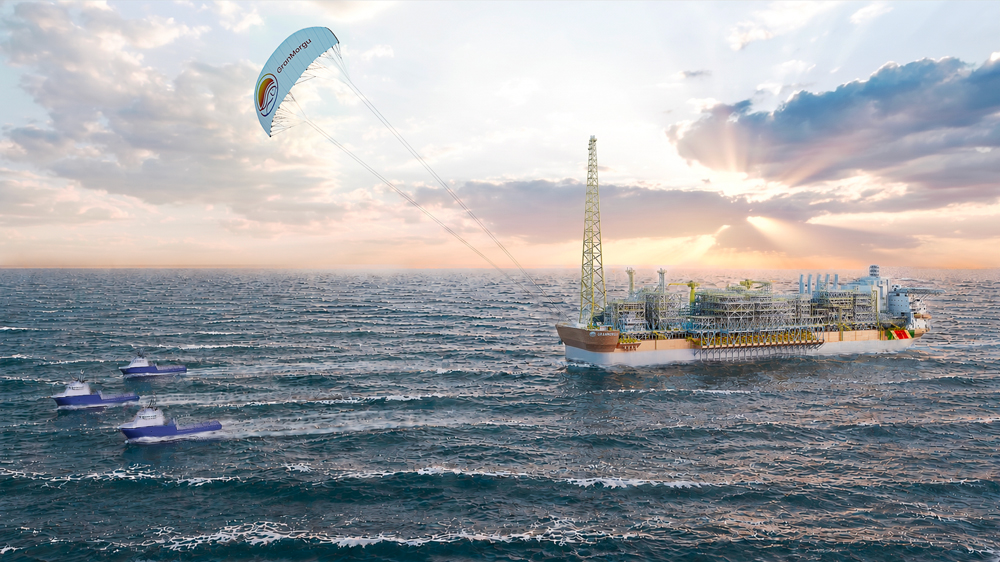
Annand Jagesar, CEO of Staatsolie, Suriname's national oil company, called it "a historic milestone in Suriname's oil and gas industry. What seemed like a distant dream is becoming a reality," while President Chandrikapersad Santokhi told the nation, "We consider this a historic and milestone occasion, creating significant opportunities and revenue prospects for Suriname, as well as attracting investors worldwide" (TotalEnergies, Oct. 1, 2024).
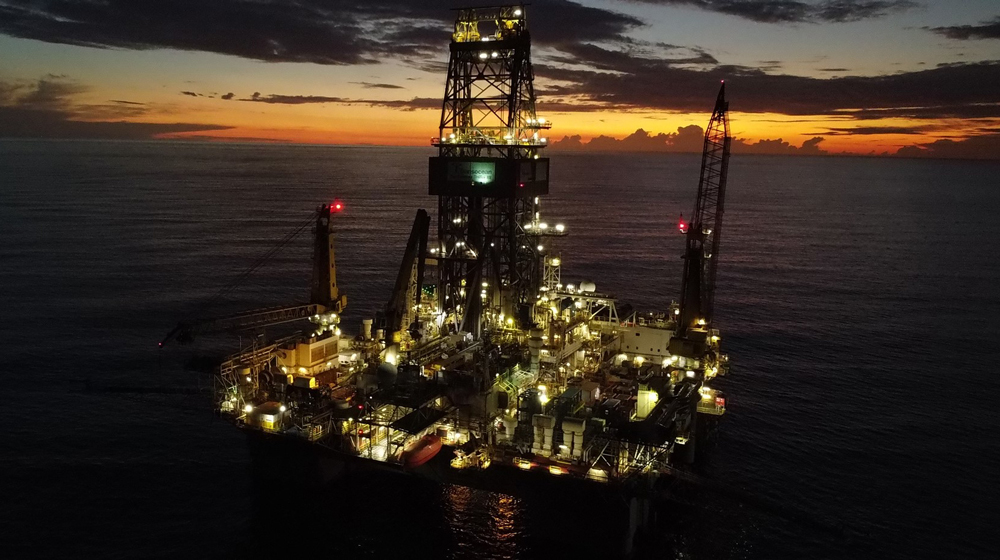
By mid-2026, the project had moved deeper into execution, with progress recorded across financing, subsea equipment, FPSO construction (Fig. 5), and workforce preparation, with offshore installation activities expected to begin in 2026 (OilNOW, June 2026). As of mid-2025, the offshore field development stood at roughly 13% complete, with the FPSO under construction at approximately 27% progress (Offshore Energy), a figure that has since advanced substantially, as the FPSO hull entered dry dock in China in April 2026. Rystad Energy reported in March 2026 that the vessel will carry a 50,000-ton topside with gas-processing capacity of 500 MMcfd, with technical parameters aligning with major Brazilian pre-salt developments (Brazil Energy Insight, March 4, 2026).
Ownership has also shifted. Staatsolie ultimately settled its position, such that the project is now split 40% TotalEnergies (operator), 40% APA Corporation, and 20% Staatsolie (OilNOW). Staatsolie secured more than $2 billion in 2025 to fund its stake, including a $1.6 billion syndicated loan from 18 banks. That is a meaningfully larger local stake than the original 50/50 international partnership envisioned at FID, underscoring Paramaribo's determination to capture more value from its first offshore development than Guyana's original 2016 PSA arrangement did for Georgetown.
Suriname's exploration and appraisal program has continued to broaden, Fig. 6. TotalEnergies added acreage in June 2025, signing an agreement to acquire the 25% interest held by Moeve (formerly CEPSA) in Block 53, joining APA (45%, operator) and Petronas (30%) as partner in a license containing the Baja-1 discovery (TotalEnergies SEC filing, June 27, 2025). Javier Rielo, TotalEnergies' Senior Vice President for Americas Exploration & Production, said, "This acquisition brings new resources to the development of our low-cost and low-emission GranMorgu project."
Gas, not just oil, is also becoming a distinct strand of the Suriname story. In November 2025, Petronas and Staatsolie declared commerciality of Sloanea gas field in Block 52, with an FID targeted for second-half 2026 and first gas slated for 2030 (Petronas, Nov. 14, 2025). Petronas Vice President of International Assets, Upstream, Mohd Redhani Abdul Rahman, said the milestone "affirms the field's economic feasibility towards its development and commercialisation" (Petronas), and Suriname's Minister of Oil, Gas and Environment, Patrick Brunings, told Reuters, “The whole world is now looking for reliable gas suppliers, and we believe we can play that role very well."
Analysts continue to flag the geological continuity between Block 58 and Guyana's prolific Stabroek acreage, with continued exploration success. Petronas reported in mid-2026 that it had now drilled eight successful wells across its Suriname blocks, unlocking recoverable resources of more than 1.0 Bboe. Analysts caution, sensibly, against over-extrapolating Guyana's boom onto Suriname. One recent assessment noted that Suriname's oil boom "is not guaranteed" to match Guyana's, given that timelines and geological risks mean a Guyana-style boom is not guaranteed (OilPrice.com, Nov. 28, 2025). To date, there is a smaller single-FPSO project on a smaller population base, rather than the eight-project, near-1.7-MMbopd buildout underway next door.
GUYANA'S ONSHORE BUILD-OUT: GAS-TO-ENERGY AS THE DOMESTIC DIVIDEND
If offshore Guyana is a story about ExxonMobil-led megaprojects, onshore Guyana over the past year has been dominated by one flagship initiative: the 300 MW Wales Gas-to-Energy project on the West Bank of Demerara, designed to pipe up to 50 MMcfd of associated gas from Liza field ashore to fuel domestic power generation and an NGL plant supplying LPG for household cooking.
Progress has been steady, if occasionally contested. By early 2026, officials reported all four gas turbines installed on their foundations, six main transformers installed, and roughly 90% of the project's equipment already manufactured (News Room Guyana, Jan. 10, 2026).
The government's stated target, reaffirmed in May 2026, is first power turbine online by the end of 2026, all gas turbines commissioned by the end of first-quarter 2027, and full combined-cycle operation completed by June 2027 (Guyana Chronicle). That timeline has already slipped once from an original late-2024 target, and independent reporting has raised doubts about whether even the revised end-2026 date will hold.
Five firms have been prequalified to bid for the Phase Two 300-MW plant and matching NGL facility at Wales, and Brassington has confirmed that a second gas-to-energy project altogether is planned for Berbice (Stabroek News, Feb. 21, 2026). The 1,400-acre Wales Development Zone forming around the plant is intended to host complementary industrial anchors—including a proposed ammonia and urea plant and gas bottling and LPG logistics facilities—an explicit government strategy to use cheap domestic gas to seed downstream industry rather than exporting all associated gas value offshore.
PORTS AND PIPELINES: THE LOGISTICS CATCH-UP
Guyana's oil boom has exposed the limits of a shipping and logistics infrastructure built for a pre-oil economy, and the past year has seen the country's port ambitions finally begin to move from talk to procurement. The centerpiece is a proposed deepwater port at the mouth of the Berbice River, intended to serve both oil-sector logistics and general cargo, reducing reliance on transshipment through Trinidad and Jamaica.
Engineering giant Bechtel has been engaged with the government on design and permitting, and as of April 2026, the U.S. Export-Import Bank had signaled formal interest in financing a related $285 million deepwater port being built by a joint venture of Muneshwers Limited and John Fernandes Limited, a development seen locally as a significant endorsement that could accelerate construction.
Vice President Bharrat Jagdeo has pushed a larger, competing vision for a separate, Panamax-capable national port as well, favoring a causeway design. "We believe that the best model should be a causeway model going out, right into the deep, that would allow the largest vessels in the world to come here," Jagdeo said (OilNOW), while acknowledging the higher upfront cost of that approach.
Meeting with Bechtel executives in mid-2025, President Ali pressed for urgency: "This project is of national, regional, and hemispheric importance…we must move forward as quickly as possible to ensure construction begins and is completed in the shortest possible time" (OilNOW). Plans also call for a transmission line to enable electricity exports from a prospective second Berbice gas plant.
On the pipeline side, Guyana's only offshore-to-onshore gas pipeline remains the roughly 200-km (124-mi) line carrying associated gas from the Stabroek Block to Wales—the backbone of the Gas-to-Energy project—with the government's stated ambition to eventually double throughput capacity as Phase Two comes online. No new subsea oil export pipelines have been sanctioned in Guyana; crude continues to move via FPSO-to-tanker offloading, a structure expected to persist, as additional FPSOs are added to the Stabroek fleet.
THE NEXT 12 MONTHS: WHAT TO WATCH
Production trajectory. Expect Guyana's daily output to push toward, and likely past, the 1.0 MMbopd mark, as Uaru ramps up through 2026. Countrywide, there is a credible path to roughly 1.3 MMbopd by end-2027, once Whiptail is online, and the long-stated 1.7 MMbopd, eight-project ceiling still targeted for 2030. The pace at which Longtail clears regulatory review, and how ExxonMobil's newly filed 35-well exploration and appraisal campaign is received by Guyana's EPA, will be the key signals for whether that ceiling eventually rises further.
Suriname's construction curve. GranMorgu's FPSO and subsea construction will be the dominant Suriname storyline through 2026-2027, with first oil remaining targeted for 2028. Watch for a Sloanea gas FID during second-half 2026, which would mark Suriname's first sanctioned standalone gas development and begin to diversify the country's hydrocarbon story beyond a single oil project.
Venezuela's trajectory as a wildcard, not a threat. The U.S.-installed transitional order in Caracas has, for now, sidelined the Essequibo claim as an active operational risk for Guyana. That said, the legitimacy and durability of Venezuela's transitional government, the unresolved ICJ case, and the possibility of renewed instability all argue for continued vigilance, rather than complacency among insurers and operators.
Domestic energy delivery. The single, most consequential test for the Ali government's second term will be whether Wales Gas-to-Energy actually delivers first power on anything close to its stated end-2026 or early-2027 target, and the promised 50% reduction in consumer electricity costs. Given the project's history of schedule pressure and contractor disputes, on-time delivery is plausible but far from assured; any further slippage will be a significant test of public patience with a government that has staked considerable political capital on the project's domestic dividend.
Infrastructure financing. Whether the Berbice deepwater port secures firm financing—from the U.S. Export-Import Bank or otherwise—and moves from design to construction will be a bellwether for whether Guyana's non-oil infrastructure ambitions can keep pace with its offshore production growth.
THE BOTTOM LINE
A year ago, this corridor's central question was whether Guyana and Suriname could convert geological luck into durable economic transformation while avoiding both the resource curse and an existential territorial threat from Venezuela. Twelve months on, the production numbers keep climbing, Suriname has moved from paper commitments to physical construction, Guyana's electorate has endorsed continuity over contract renegotiation, and the Venezuela threat has been dramatically, if untidily, defused by external military intervention rather than diplomacy.
None of that guarantees smooth sailing. The schedule risk on Wales, financing risk on Berbice, and genuine uncertainty about what a post-Maduro Venezuela becomes, all remain live issues. Yet, the region enters the second half of this decade with considerably more momentum, and considerably less existential risk, than it carried into 2025.
Related Articles- Tethered BOP technology enables DP rigs to drill in shallow water (June)
- Late-life field management: Repair, repurposing and obsolescence management support sustainable well integrity (June)
- Enhancing Lower Tertiary recovery and profitability: The options – Part 2 (May)
- Nova Scotia’s Premier aims to revive province’s oil and gas activity (May)
- First Oil: OTC soldiers on for another year (May)
- OTC recognizes 2026 Spotlight on New Technology® Award winners (April)