How new technology is advancing well construction efficiency in the Permian basin
DOUGAL BROWN and AMY FARRAR, Expro
BUILD RIGHT, PRODUCE RIGHT
Growing domestic demand for oil and gas, and global supply security concerns, are placing North America’s shale plays in the spotlight once more.
With a clear focus on cost performance and maximizing production revenue, reaching first oil or gas as quickly as possible in a safe and financially efficient manner—while reducing rig time—is critical for unconventional wells. However, maintaining robust and long-term well integrity is equally important, where the same criterion of net cost reduction, surety of production and risk reduction also apply.
Well construction efficiency, delivering right-first-time wells—from improving drilling performance to optimizing well integrity and beyond—can accelerate the time to production, optimize performance and reduce well construction costs and commercial risks. Modern technologies and well construction practices are providing the Permian basin with opportunities to significantly enhance drilling and integrity performance, enabling wells to be built more cost-efficiently and quickly, while ensuring well longevity to maximize production revenue.
A DYNAMIC AND DEMANDING ENVIRONMENT
The Permian basin is a dynamic and changing environment, where margins can be tight, and financial discipline plays a significant role in operational decisions. Operators are under pressure to drill faster, reach target depth sooner and start production as quickly as possible. Three-to-four-mile lateral sections are not uncommon, and some operators have switched to U-turn well designs, which allow them to remain within their target formation trajectory—without extending beyond the boundaries of their pad acreage. However, the engineering complexity and technical solutions that these processes require can be considerable.
CLOSING THE GAP: WELL LIFECYCLE OWNERSHIP
Alongside the technical challenges sit operational issues. Maintaining the integrity of the well is obviously essential. Key to achieving this—and to helping to ensure well construction efficiency—is establishing a robust overall ownership process for the well. This involves bridging the gap between the shorter-term objectives at the drilling stage (that is, drilling a well quickly and efficiently, so that it can start fast production) and the longer-term goals of the intervention stage throughout the well’s lifecycle. Over 90% of a well’s life is devoted to the operational phase and focused on production. However, the outcome of a well’s integrity is usually shaped by the first 5% to 10% of its life, in the design and construction phase. Making the right choices here is critical.
Operators that undertake effective due diligence to fully appraise the well’s environment, identify and specify the most appropriate technologies and practices, and run the well in an optimal manner that delivers both improved drilling performance and integrity assurance, can be regarded as making an investment in well construction efficiency from the earliest stages. This will help determine the performance of the well throughout its life. The first stage to consider in well construction efficiency is drilling performance.
OPTIMIZING DRILLING PERFORMANCE
The fundamental objective of well construction efficiency at the drilling stage is to deliver a smooth, in-gauge wellbore to enable the casing to be run to depth. Hole cleaning is one of the most critical variables in this environment. Cutting bed impellers that are run on the drillstring provide a means of agitating and mobilizing accumulated cuttings, preventing build-up that can lead to stuck pipe, increased torque and drag and, ultimately, an impacted ability to run casing to the total depth (TD). Traditionally, agitators have been commonly used in the Permian basin, providing oscillation to the bottomhole assembly that helps the drillstring advance through long, horizontal sections.
Reaming solutions, such as Expro’s AERO™ reamers, can support faster and more efficient drilling, u-turn wells and batch drilling, by ensuring a smoother wellbore, reducing the requirement for back reaming and ensuring the casing and liner strings can reach TD. These reamers can improve wellbore drift by spiraling to remove ledges. In the Permian, the AERO™ Eccentric Reamer is deployed to create a smooth torque response that optimizes drilling steerability and wellbore stability, to improve casing running operations, cementing clearance, drilling efficiency and overall hole integrity. Ensuring that the hole is smooth and cuttings have been removed effectively, thus leaving a clean hole, is critical to enabling casing to be successfully run to the bottom of the well.
RUNNING CASING TO DEPTH
The characteristics of wells in the Permian basin vary considerably, with some wells having a vertical depth of around 4,000 ft before stepping out 2 mi or more, while others may have vertical depths of 10,000 ft before the horizontal section begins. In every case, the combination of vertical and horizontal reach creates substantial torque and drag that must be carefully managed, to ensure the casing string reaches TD.
Casing flotation can reduce the effective drag on the string during running. By introducing a flotation system, operators can reduce the contact force between the casing and the wellbore, enabling the string to advance through long horizontal sections, without the weight of the casing dragging along the low side of the hole, causing challenges and sometimes preventing casing from reaching target depths. However, flotation systems require higher-rated float equipment and careful torque and drag modelling, to ensure the casing has sufficient weight to reach bottom, while also benefiting from the drag reduction the flotation provides.
The casing connections used in these applications must also be suited to the demands of the job. High-specification, premium connections provide the capacity and sealing performance required for both the casing running operation and subsequent production. For the production string in particular, external-grip mechanical casing running tools engage the outside of the casing rather than the bore, preserving the internal surface of the production string—eliminating the risk of accelerated corrosion in the production casing bore—to create a well with the integrity to last its intended lifecycle.
The casing running tools also provide the high-torque capacity needed to make up premium connections efficiently. Flush-mount spiders complement this approach, by holding the casing string in the rotary table during connection makeup, allowing the top drive to spin the connection, without the need for a manual backup tong. Not only do the mechanical casing running tools optimize run speeds and operational efficiency, they also significantly enhance operational safety by reducing the exposure of personnel in the red zone, during routine casing running operations.
CEMENT INTEGRITY: ENSURING LONG-TERM WELL PERFORMANCE
Cement integrity issues cause regular operational downtime in the Permian basin. Failed cement jobs during construction take unscheduled time and expense to repair, delaying production start-up. Integrity failures occurring during the operational phase often require wells to be shut-in until problems are diagnosed and integrity is reinstated. In both cases, wells are prevented from delivering the expected return on investment.
The two key integrity issues caused by poor cement integrity are corrosion in the annuli and sustained casing pressure. Both can cause a well to be shut-in, if the issue escalates beyond a manageable level. Some operators have reported corrosion damage to intermediate casing within two years of the well starting production, and this can have a significant impact on the well’s life and its estimated production revenue.
The intermediate string is typically not specified to the same material standards as the production string because, in a properly cemented well, it should never see production fluids. As a result, when the cement barrier fails or is inadequate, the intermediate string is susceptible to corrosion. Operators running liner production strings rather than full-string completions are further exposed to this risk, because the annular space above the liner top is more likely to be in contact with the production zone, if the intermediate cement is imperfect.
An established solution to poor cement placement, which can reduce risk exposure, is rotating pipe and decreasing wellbore fluid static time during the cement job. Moving pipe while cementing improves cement distribution in the annulus, breaking up the filter cake on the wellbore wall and ensuring that the cement achieves full circumferential coverage, rather than channeling. Rotating or reciprocating the pipe to get the wellbore mud moving and breaking up the filter cake can also lead to a better cement bond and an improved chance of achieving zonal isolation and well barrier objectives the first time.
Technologies that enable rotation during cementing operations include Expro’s Generation-X™ Plug Launcher. The tool accommodates the large-diameter plugs required for surface and intermediate casing, and it allows the string to be rotated from the surface through the cement head during displacement; while the hole is conditioned, the cement is pumped and the cement is displaced to its planned location. It also supports online cementing with a wet shoe system—enabling operators to save a run on their first perforation of the shoe section of their casing—and includes an isolation valve and wireline flange that allows for remedial operations, if there is a well control incident after cementing.
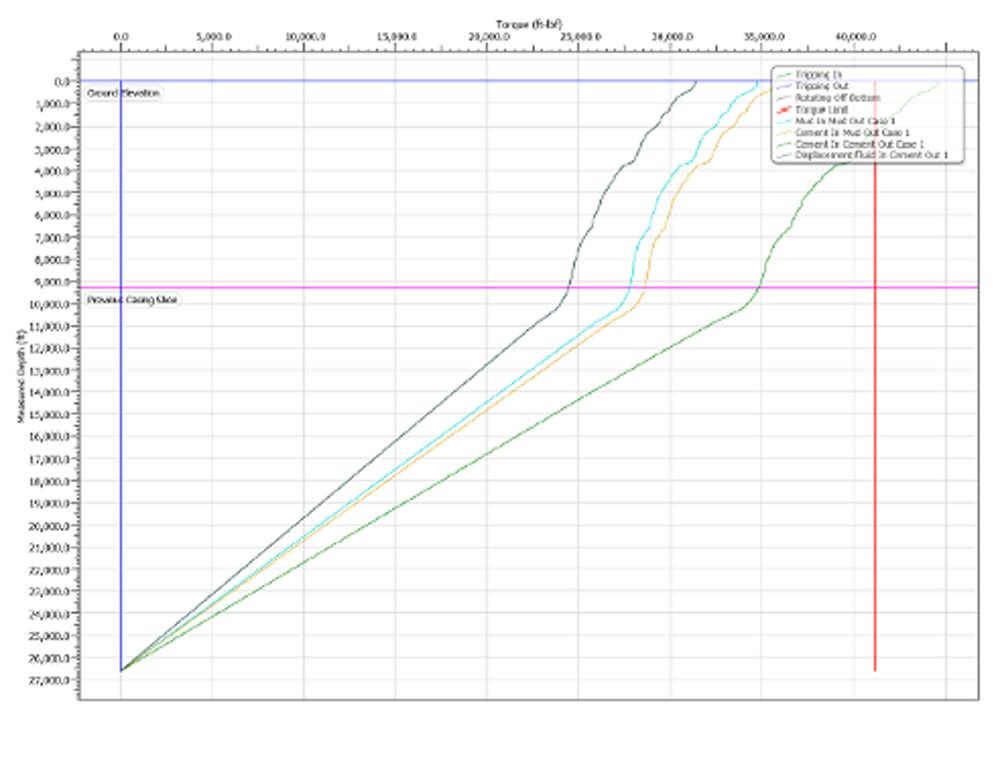
The primary constraint on rotation is the torque rating of the casing connections rather than the available power from the top drive: operators limit rotation to the optimal rated or operational torque of the connection to avoid over-torquing, and modified buttress connections provide the torque capacity needed to make rotation practical on these strings.
The challenge for operators is that rotating while cementing on intermediate and surface strings can represent an additional investment. However, the evidence from wells that have experienced cement integrity failures suggests that the cost of remediation and the loss of production can exceed the cost of assured performance.
PIPE ROTATION IMPROVES CEMENT PLACEMENT: U.S. LAND CASE STUDY
A shale operator drilled three wells in the same area, with identical centralizer placement (one per three joints on 5.5-in. casing, across lateral sections of approximately 16,000 ft) and varied cementing practices across each well, to evaluate the impact on cement quality and zonal isolation.
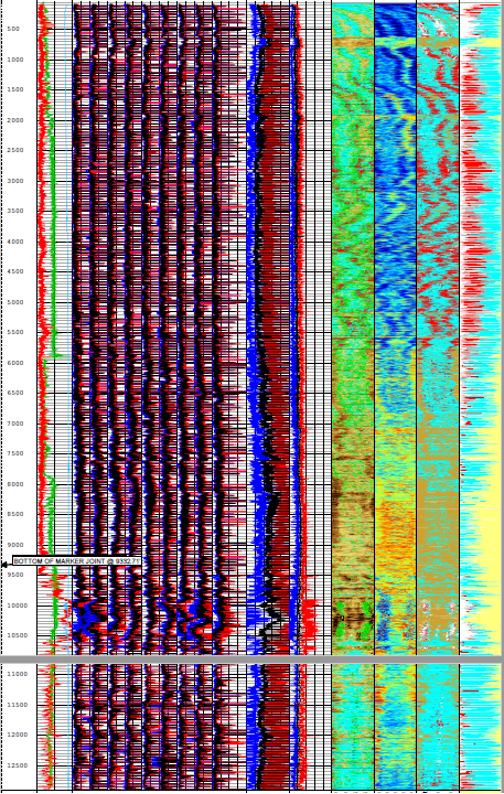
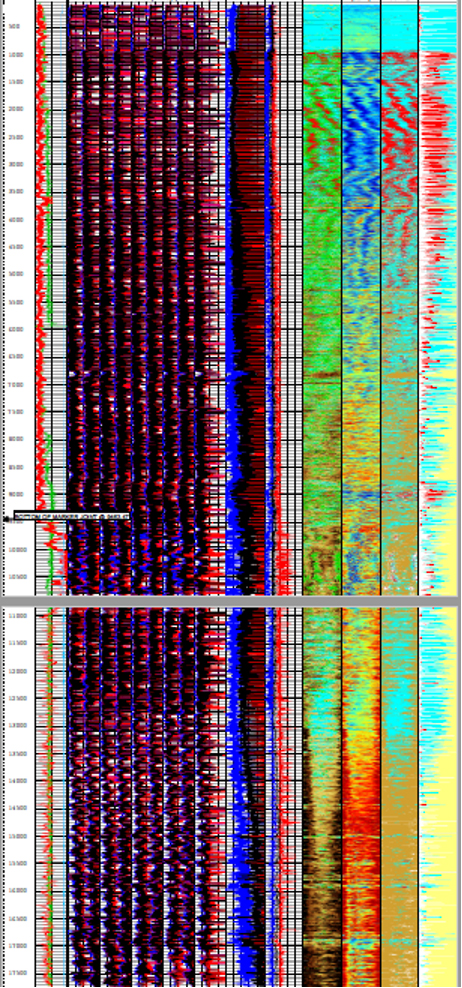
The first well was cemented without pipe rotation, using a conventional non-rotating cement manifold. The cement bond log (CBL) confirmed the outcome: laminar flow dominated during displacement, leading to channeling through the mud and poor zonal isolation. The results established the baseline and drove a structured evaluation of rotation and cement additives on the subsequent two wells, Fig. 1.
Before proceeding to the second well, the operator conducted a full pre-job review, covering casing connection torque ratings, torque and drag (T&D) modelling across multiple stages of the cement job (from casing landing through to final displacement), surface equipment capability and centralizer selection. The operator selected a fully wireless cement head capable of launching plugs and operating isolation valves remotely, maintaining rotation throughout the job without interruption. The casing connection was upgraded to one rated to 41,180 ft-lbs operating torque, which provided sufficient capacity for sustained rotation during cementing.
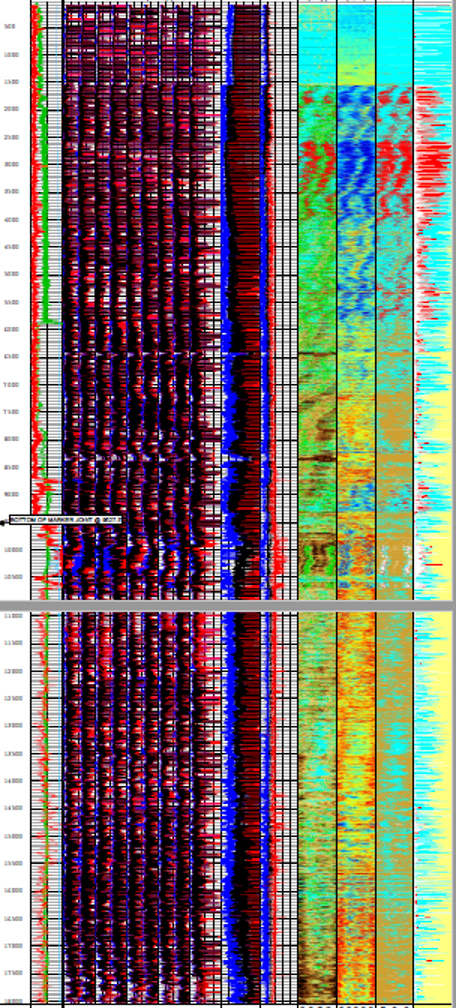
On the second well, the casing was rotated during cementing, and cement additives that limit fluid migration were pumped in the cement blend. Rotation commenced at 15 rpm and 21,000 ft-lbs, as the bottom plug was launched and continued through the lead and tail cement stages and into displacement. Rotation stalled late in the tail cement displacement phase, but the CBL confirmed a marked improvement: channeling was substantially reduced, turbulent flow was achieved across the critical sections, and zonal isolation was confirmed during completions, through higher breakdown pressures. The cement additive appeared to further enhance the isolation achieved, Fig. 2.
The third well was cemented with rotation but without the additive, to isolate the contribution of pipe movement alone. Rotation commenced at 19,000 ft-lbs and continued until stalling approximately 50 bbl into displacement. The CBL results were comparable to those of the second well: turbulent flow was again achieved, channeling was significantly reduced, and completions confirmed improved zonal isolation, through higher breakdown pressures, Figs. 3 and 4.
The three-well test demonstrated that pipe rotation during cementing can support improved cement placement in long lateral wells. It also showed that when faced with the challenges of longer and deeper wellbores, operators can benefit from utilizing new technologies that allow them to accomplish field proven practices and ensure cement integrity during primary cement jobs.
The cement additive provided additional benefit, but it was not a substitute for full rotation. The results suggest appropriate surface equipment—specifically, fully automated cement heads that allow for reduced wellbore fluid static time, rotating or pipe movement while cementing and keeping personnel out of the red zone—can enable the operator to achieve their primary cement job objectives, while safeguarding their rig personnel against increased risk during the operation.
EARLIER PRODUCTION, SUSTAINED PERFORMANCE
The Permian basin is one of the most dynamic and competitive well construction environments in the world. The pressure to reduce well construction time, lower costs and reach first production as quickly as possible is significant, and technology must adapt continuously to meet evolving demands. However, the most significant opportunity for Permian operators may lie not merely in reducing rig time. Taking a holistic approach to well construction means understanding how decisions made during drilling and cementing affect the well’s efficiency, integrity and productivity, throughout its operational life. This approach can help deliver greater long-term value.
Smoother wellbores, casing run more reliably to TD, and effective cement placement are drivers to reducing net well construction costs, eliminating high-potential risks and optimizing red zone management and maximizing monetization from the well, through surety of production.
Expro offers a broad range of proprietary solutions and services, to enable well construction efficiency at every stage of onshore and offshore well construction. These include the ADVANCE suite of drilling tools, ORIGIN wellbore clean up tools, Frank’s Tubular Running Services (TRS), as well as cementing technologies, downhole service tools, tubular products, drilling services, subsea well access, surface well test, fluid sampling and analysis, wireline services and integrity monitoring. These well construction efficiency services span the full construction cycle, from drilling and casing, to completion, commissioning and temporary suspension.

DOUGAL BROWN is global market development manager at Expro, based in Aberdeen, Scotland, where he leverages more than 20 years of experience across offshore operations, engineering design, technology development and global market strategy in the energy sector. With a bachelor’s degree in mechanical engineering from University of the Highlands and Islands in Inverness, Scotland, and a focus on well integrity throughout his career, Mr. Brown is an inventor of many patented technologies. He is also a regular contributor to professional discussions on well construction efficiency, automation and integrity assurance.

AMY FARRAR is area managing director for North America Land at Expro, where she leads operations across the Lower 48 United States, Alaska and Canada. With a bachelor’s degree in mechanical engineering from the University of Texas at Arlington, Ms. Farrar brings 25 years of oil and gas industry experience, spanning engineering design, project management, operations and commercial leadership.
Related Articles- Well construction technologies advancing the Permian basin: Industry progress, new benchmarks and field insights (July)
- Maximizing horsepower delivery in modern frac fleets through advanced pump design (July)
- Late-life field management: Repair, repurposing and obsolescence management support sustainable well integrity (June)
- Shifting from calendar to usage-based maintenance: Proven results that demand your attention (June)
- Extended-length gas separation improves ESP stability in slug-prone Permian wells (June)
- Shaletech Report: Permian activity remains steady with growth through efficiencies (April)