Deepwater Development, Day Three: Malaysia’s deepwater portfolio continues to grow
World Oil/Gulf Energy Information’s Deepwater Development Conference wrapped up its highly successful three-day stand in Lisbon on Thursday. The final day featured a keynote address, one panel solo speakers, and three themed technical sessions. The participants were a good combination of operators and service companies.
Keynote on Malaysia. The highlight of the day was a keynote address by Budi M. Nasron (Fig. 1), General Manager, Resource Development & Management-Sabah, Malaysia Petroleum Management, at state firm Petronas. Nasron noted that while larger deepwater producers, such as Brazil and Guyana, get most of the attention, Malaysia certainly has its share of such output.
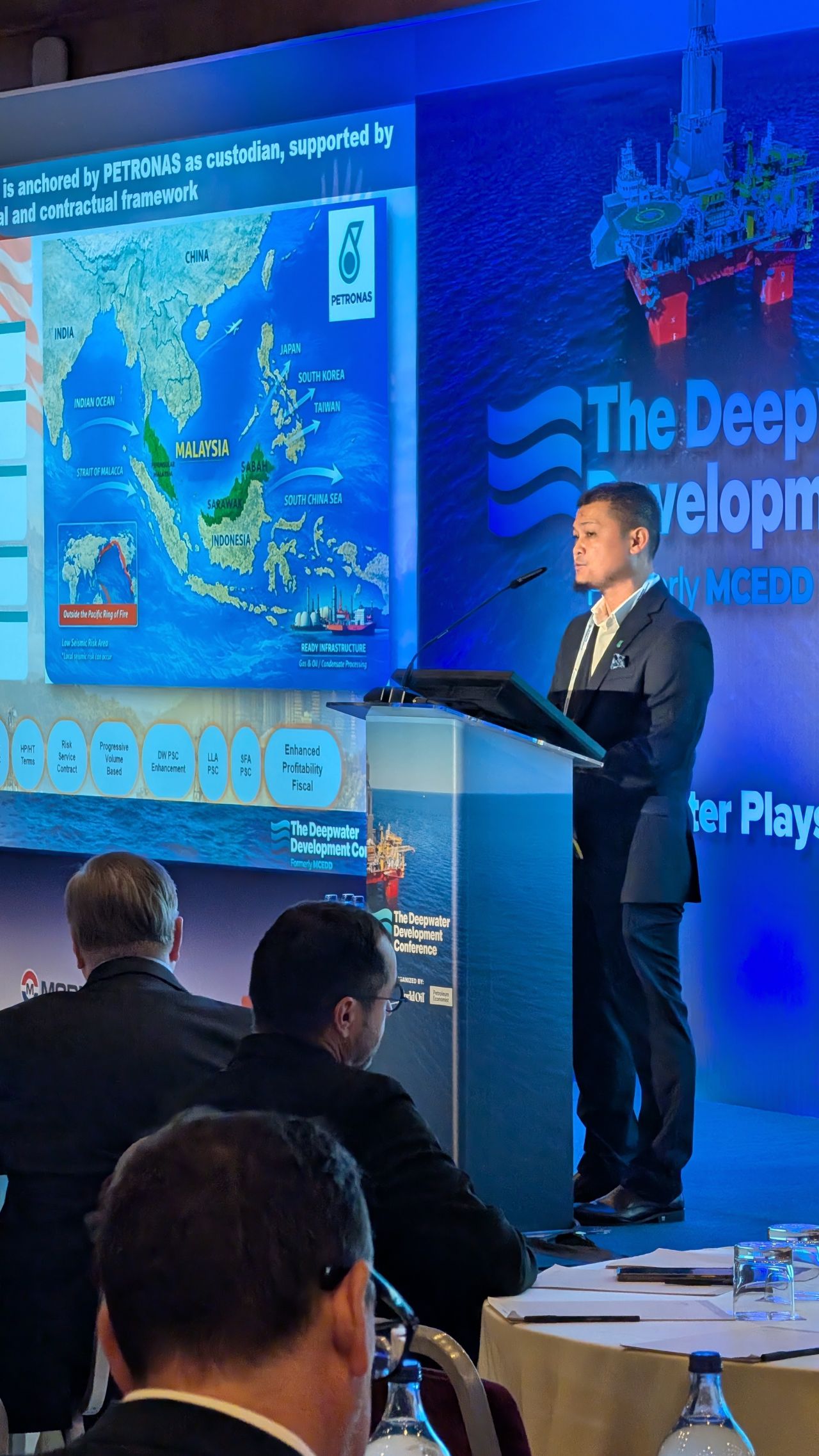
“Deepwater wells are contributing up to 30% of Malaysia’s total oil production,” said Nasron. He explained that the country produces 1.8 MMboed, with about 75% of that being natural gas. The remaining 400,000 boed or so is oil. A majority of Malaysian production occurs in Sarawak state.
Back in 1974, noted Nasron, the Malaysian government gave Petronas the authority to manage all upstream oil and gas activity in the country. This was shortly after the firm was created that year. In turn, Petronas acts as custodian of the country's hydrocarbon resources. The company manages blocks, issues licenses, and awards PSCs to operators for exploration, development and production activities.
“The first Malaysian deepwater discovery was in 1994,” said Nasron, and there has been a steady string of such finds since then. “The Megah oil discovery in 2025 is the most recent one,” he added. Situated offshore Sabah state, its initial reserves are estimated at 200 MMboe to 300 MMboe, and Petronas is beginning early development work to move the field forward.
Meanwhile, Nasron said Petronas is running extensive seismic surveys to identify additional, potential oil and gas prospects that could be awarded for exploration. Among the more notable deepwater fields developed off Malaysia is Kikeh, which is operated by PTTEP and went onstream in 2007. “Kikeh was the first-ever truss spar platform installed outside the Gulf of Mexico/America,” said Nasron. In addition, there is an FPSO for oil storage and export. Additional, notable deepwater fields onstream are Malikai, Gumusut-Kakap and the Block H gas fields (featuring an FLNG).
Operator panel. Another highlight of the conference’s final day was the last session, an operator panel. Participants in this panel included Jean-François Stachera, Performance & Engagement Manager for TotalEnergies’ GranMorgu Project; Christie Brown, Director for Offshore Business Asset Development at Chevron; and Petronas’ Budi Nasron, mentioned earlier in this story (Fig. 2).
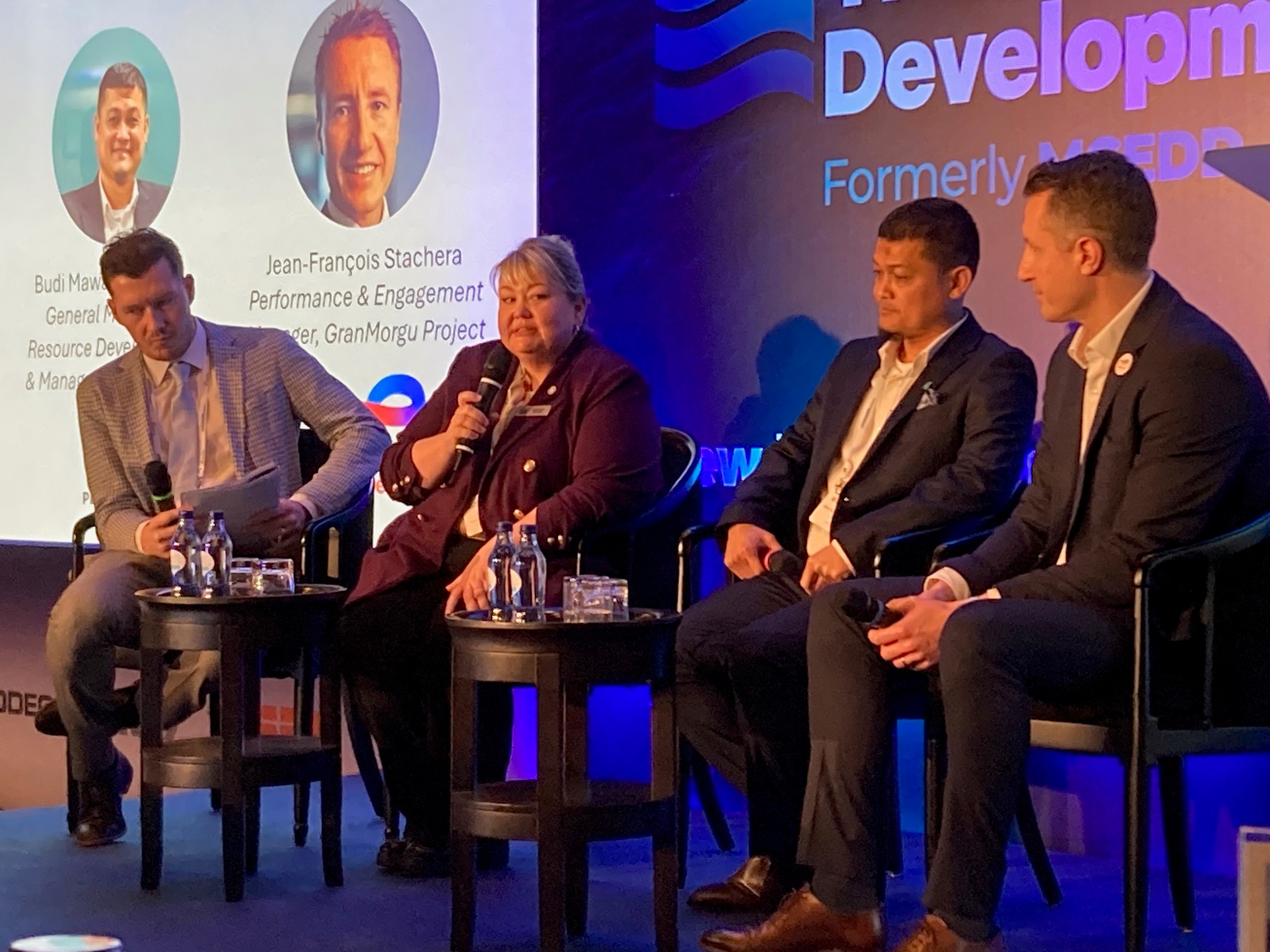
The panelists tackled a number of issues launched at them by moderator Gordon Hardie, Head of Sub-Saharan Africa at Welligence. One of those was whether new technologies are helping to de-risk exploration and appraisal. The collective answer was “yes,” albeit with caveats that one can never be totally sure about a prospect until a well is drilled. There also was a lot of enthusiasm for the thought that successful, thoughtful project execution, accompanied by good collaboration between operators and their serviced partners, can reduce project over-runs,
On some other subjects, TotalEnergies’ Stachera engendered some audible response from the audience, when he said that no matter how much one plans, “keeping a deepwater project on track can be a challenge.” Chevron’s Brown noted an going problem, when she said, “there’s a lack of standards, when it comes to well abandoments.” But in the end, all three panelists agreed that deepwater activity continues to have a bright future, with some momentum behind it.