Building the electric foundation for the autonomous oil field of the future
BJARTE PEDERSEN, SVP IMEA, ABB ENERGY INDUSTRIES
The global energy system is facing competing challenges. Demand is rising, driven by industrialization across Asia, population growth in Africa and the Middle East, and the expanding energy requirements of digital infrastructure. At the same time, operators across all producing regions need to modernize legacy assets, reduce operational costs and demonstrate a credible path toward lower-emissions production. Navigating these challenges requires clear strategic choices about where and how to invest.
Across the IMEA region—India, the Middle East and Africa—the scale of what is at stake is clear. The Middle East alone is forecast to invest approximately $110 billion in oil and gas supply in 2026, a 10 percent year-on-year increase as major projects move from final investment decision into execution. The region accounts for around 30 percent of global oil production and 17 percent of global natural gas production. Gas consumption across the Middle East and Africa is forecast to grow by 3.5 percent in 2026—the fastest rate of increase in several years—driven by industrial activity and growing electricity demand. These figures represent the here and now and underline a requirement to build and upgrade assets.
The context matters because it shapes the choices available. IMEA is not a region in managed decline, cautiously extending the life of legacy infrastructure. It is a region making significant long-term choices on its own energy future, and the decisions being made now about how that infrastructure is designed, powered and controlled will define operational performance for decades to come. The question is not whether to invest, but rather to make strategic decisions on which infrastructure to invest in.
Electrification offers a compelling path forward. The commercial, operational and strategic arguments for it are consistently stronger than the alternatives. Electrification is a mechanism that can allow operators to scale production reliably, affordably and safely—and offers a foundation on which the next generation of energy operations can be built.
THE BUSINESS CASE FOR THE ALL-ELECTRIC FIELD
The commercial case for electrification is not built on a single argument. There are four distinct pillars, and each addresses a real operational challenge that IMEA producers face today.
OPEX REDUCTION
Operating expenditure across the Middle East energy sector has been rising at 6–7 percent per year, driven by production growth, aging assets and increasing operational complexity. That trajectory is not sustainable without intervention. Electric motors and variable-speed drives directly address this pressure. Compared with diesel or gas-driven equivalents, electric systems reduce energy waste, extend equipment life and lower maintenance requirements. They also simplify the fuel logistics supply chain at remote or offshore sites, which carries its own costs and operational risks. The economics are clear and consistent: electrification reduces OPEX throughout the asset's full lifecycle, not just in the initial years of operation.
For operators facing sustained cost inflation, that lifecycle perspective matters. The upfront investment in electric infrastructure pays off not through a single efficiency gain, but through a sustained reduction in the asset's operating costs. In a market where margins are under pressure and investor scrutiny of capital allocation is intense, that is an attractive proposition.
RELIABILITY
Electric systems reduce mechanical complexity. Fewer moving parts mean fewer failure points, faster fault detection and more precise control of operating conditions. For an industry where unplanned downtime translates directly into lost production and revenue, this is not a marginal consideration. In some cases, a single unplanned shutdown on a major production asset can cost an operator more than the entire capital outlay on the electrification upgrade that could have prevented it.
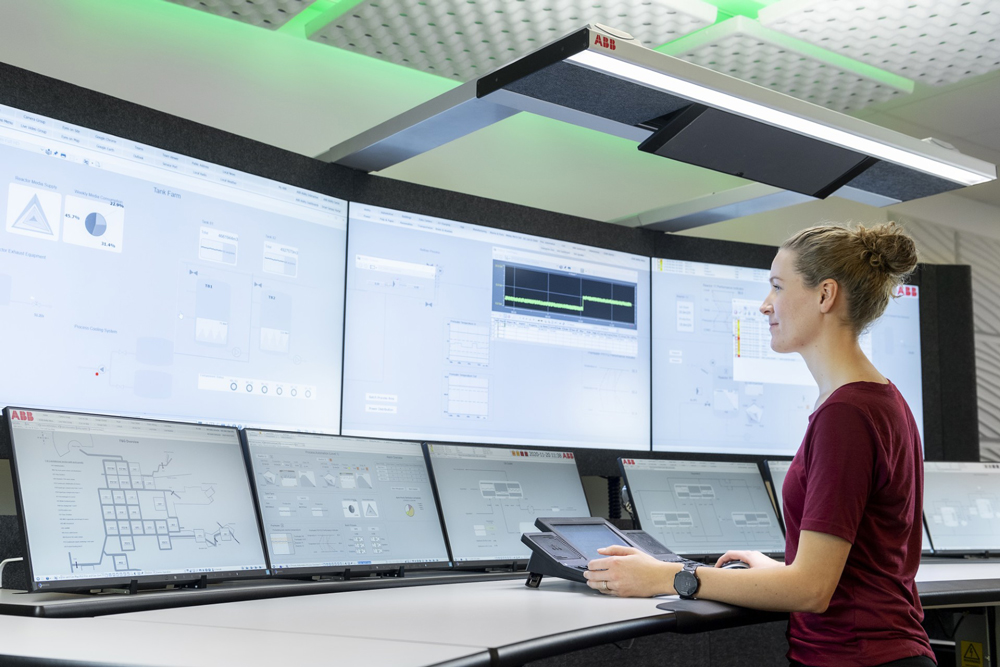
The shift to electric infrastructure is also a shift towards more predictable, more manageable operations. Condition monitoring becomes easier, maintenance scheduling becomes more accurate and the window of uncertainty around equipment performance narrows (Fig. 1). That predictability compounds in value as assets age, as operational demands increase and as the workforce required to manage complex mechanical systems becomes harder to recruit and retain.
AUTOMATION AS THE BRAIN
Electrification provides the muscle; integrated automation is the brain. This distinction is important, because electrification alone does not deliver the full range of innovation and efficiencies that modern oil and gas operations require. What it does is create the conditions for intelligent automation to become possible. Process and control systems that can monitor, respond and optimize in real time require a stable, precise, data-rich electrical environment to operate in. An electrified field is a field that is ready for automation. The two are closely linked—one enables the other.
This is the trajectory the industry is on, and operators who build electrification into their infrastructure now are positioning themselves to take advantage of advances in automation as they mature. Those who delay are not simply deferring a cost; they are deferring access to the operational capabilities that will increasingly define competitive performance.
EMISSIONS AS A COMMERCIAL DRIVER
Regulatory frameworks, investor expectations and the need for a social license to operate are reshaping the economics of production across regions. These considerations have direct implications for access to capital, access to markets and the long-term viability of assets. The IEA has estimated that electrifying existing LNG terminals using low-emissions electricity could reduce associated production emissions by approximately 60 million tons of CO₂-equivalent per year. That figure gives a sense of the scale of what is achievable through electrification in the energy sector, and why operators should not treat emissions reduction as a secondary priority.
Across IMEA, the regulatory environment is evolving at different speeds across markets, but the direction remains consistent. Operators who have already built electrification into their asset base are better placed to respond to changing requirements without incurring the disruption and cost of retrofitting. The emissions argument for electrification is, in the end, a risk-management argument—and it becomes more compelling with each passing year.
WHAT RUWAIS TELLS US ABOUT THE FUTURE OF IMEA ENERGY
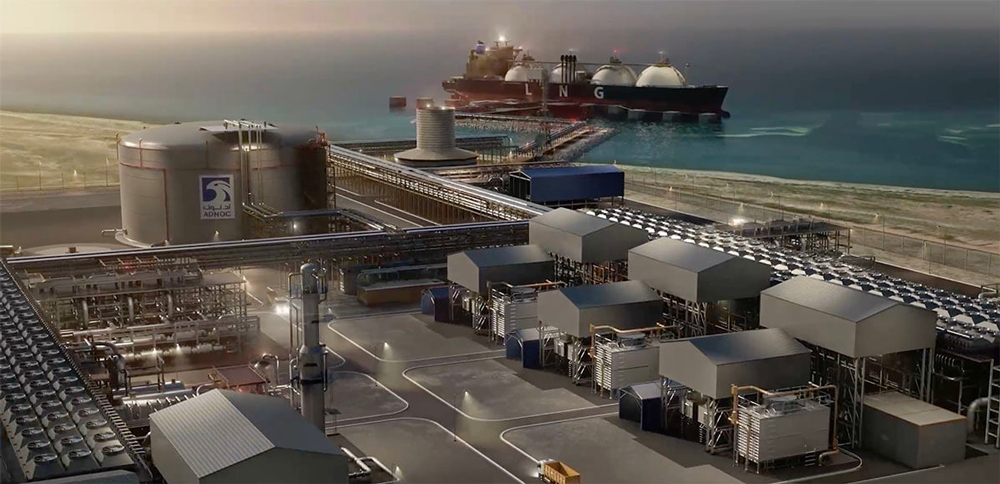
A great example of what all-electric energy infrastructure looks like in practice in the IMEA region is ADNOC’s Ruwais LNG facility in the UAE (Fig. 2)—the region’s first all-electric LNG plant, and a project in which ABB is directly involved as a technology partner.
Ruwais is significant not just as a project but as a statement of intent. Rather than retrofitting electrification onto a conventional asset, the facility has been engineered from the outset as a ‘born-electric’ plant. Its core systems have been designed from the ground up to operate on electric power and intelligent control. This is a meaningful shift in how large-scale energy infrastructure is approached in the region, and other operators will likely study it closely as they plan their next-generation assets.
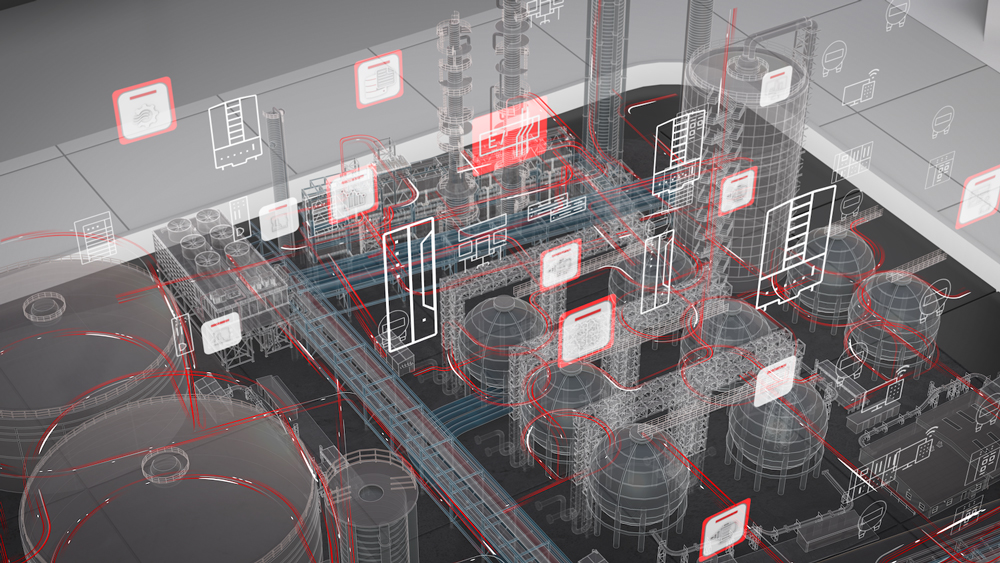
ABB’s scope on the project centers on the supply of its Electrical Control and Monitoring (ECM) system: a platform that provides real-time visibility and load optimization across all electrical assets, enabling rapid fault detection and intelligent power management across the facility (Fig. 3). The ECM does not simply record what is happening across the plant’s electrical systems—it provides the high-fidelity data and control capability needed to respond to it, in real time, with the speed and precision that a facility of this complexity requires.
The two liquefaction trains at the heart of the facility are driven by electric motors, which are the project's core electrification element. The integration of the ECM with ADNOC’s AI-driven analytics platform is what takes Ruwais beyond conventional electrification. By feeding precise, continuous data from electrified assets into AI-driven systems, the facility demonstrates the transition from reactive maintenance to predictive operations—and points towards increasingly autonomous operations that represent the long-term direction for some parts of the industry.
Ruwais is not a pilot. It is a commercial facility, commissioned by one of the world’s leading NOCs, designed to operate at scale and deliver results. Its significance for the broader IMEA region is that it makes the argument for all-electric design concrete and verifiable. The question of whether large-scale all-electric operation is achievable in this region has been answered. The work now is replication and scale.
MODERNIZING EXISTING INFRASTRUCTURE
New-build projects like Ruwais represent one dimension of the electrification opportunity across IMEA. But most of the infrastructure that will be operating in this region in the next decade already exists today. Brownfield modernization—upgrading the electrification and control systems of existing assets without disrupting the operations they support—is an equally important part of the story, and in volume terms it is likely to represent the larger share of investment.
ABB’s work on the Vadinar–Bina Pipeline in India illustrates what this looks like in practice. The 937-km pipeline, operated by Bharat Petroleum Corporation Limited (BPCL), transports 7.8 million metric tons of oil per year, making it a significant piece of India’s domestic energy supply infrastructure. The challenge was straightforward, though demanding to execute: Upgrade the pipeline’s control and monitoring systems to modern standards without interrupting throughput.
The solution was the deployment of ABB’s ABB Ability™ SCADAvantage system—a supervisory control and data acquisition platform that provides real-time visibility, remote monitoring, and automated control for the pipeline’s operations. The upgrade was completed without an operational shutdown. That outcome matters beyond the specifics of this project. It demonstrates that the barriers to brownfield modernization are lower than many operators assume, and that the operational risk of upgrading is manageable when the engineering approach is right.
The BPCL project also shows the geographic scale of the opportunity. India is one of the fastest-growing energy markets in the world. Its pipeline, refining and processing infrastructure is extensive—much of it legacy assets—and the demand being placed on it is increasing. The modernization of the Vadinar–Bina Pipeline is a microcosm of the broader IMEA challenge: the requirement to harmonize rapid industrial growth in India with the sophisticated, AI-ready standards being set by 'born-electric' projects in the Gulf.
The modernization program required by the Vadinar–Bina project is not an outlier. It is an early example of a process that will need to play out across a very large asset base. The principles demonstrated there apply consistently—electrification and modern control systems can be introduced into operating infrastructure without disruption, and the operational benefits begin accruing immediately.
THE ROAD AHEAD
Electrification is the foundation on which the next generation of oil and gas operations will be built, and getting it right now is critical.
The industry's direction is clear. Operations are moving towards greater automation, greater remote operability and, ultimately, the ability to run complex production processes with minimal direct human intervention. That trajectory is already visible in the investments leading operators are making, in the technology development priorities of companies like ABB, and in the performance advantages that early movers are beginning to demonstrate. Autonomous operations are already a reality in a growing number of applications, and the pace of adoption is accelerating.
What helps to make autonomous operations possible is a reliable, data-rich, precisely controllable infrastructure. Electrified assets generate the high-quality, high-frequency data that AI-driven systems need to function. They provide the stable, controllable power that automated systems require. They eliminate the variability and unpredictability of conventional fuel-driven equipment, which can make autonomous operation difficult to achieve and harder to sustain at scale. Every step towards electrification also advances autonomous capability. The two are structurally linked.
Across IMEA, the opportunity that follows this is substantial. The scale of planned investment in new production capacity, brownfield modernization, gas development and associated infrastructure means that the region will make consequential infrastructure decisions over the next decade. Those decisions—about how assets are powered, monitored, and controlled—will shape operational performance and competitive position for 30 years or more. The cost of getting those decisions wrong and retrofitting electrification later is consistently higher than building it in from the outset.
For operators, the practical takeaway is that electrification is not a future consideration to be scheduled into the next capital planning cycle. It is already happening here at present. The projects already underway—from the all-electric design of Ruwais LNG to the systematic modernization of pipeline infrastructure control systems in India—are establishing the template. They demonstrate that the technology is proven, the operational case is sound and the path to implementation is clear.
The IMEA region has the resources, investment appetite and strategic ambition to lead the next phase of global energy development. Electrification helps to ensure that ambition becomes an operational reality. The foundation is being laid. The task now is to build on it.
BJARTE PEDERSEN is the Senior Vice President of the Hub India, Middle East and Africa (IMEA) at ABB’s Energy Industries division. With a career at ABB spanning over three decades, Mr. Pedersen has been instrumental in driving the company’s growth and innovation. He joined ABB in 1992 and has since held various key positions, including local division management, regional business area management and global product group management. His leadership and strategic vision have significantly contributed to ABB’s success in the Non-Core Business sector. In his current role, Mr. Pedersen is responsible for overseeing IMEA region, ensuring that ABB continues to deliver innovative solutions and exceptional service to its clients. He holds a master’s degree in Control Systems from the Norwegian University of Science and Technology.
REFERENCES
- https://www.rystadenergy.com/insights/middle-east-oil-and-gas-six-strategic-themes-from-2025-and-what-to-watch-in-2026
- https://www.iea.org/reports/world-energy-investment-2025/middle-east
- https://gccbusinesswatch.com/news/iea-projects-3-5-growth-in-middle-east-gas-demand-by-2026/
- https://www.rystadenergy.com/insights/middle-east-oil-and-gas-six-strategic-themes-from-2025-and-what-to-watch-in-2026
- https://iea.blob.core.windows.net/assets/5ad737ee-750d-460e-8c33-fb9140f1043d/AssessingemissionsfromLNGsupplyandabatementoptions.pdf
- https://new.abb.com/news/detail/130262/abb-integrated-solutions-to-support-adnocs-all-electric-ruwais-lng-facility
- https://new.abb.com/news/detail/132742/abb-india-modernizes-bpcl-pipeline-to-support-uninterrupted-operations-and-national-energy-security
- Drilling Advances: Auto-Driller vs Robo-Driller vs THE BORG (July)
- Why a common safety standard still matters in a global energy workforce (June)
- Baker Hughes executive assesses progress in artificial lift systems (June)
- A Baker Hughes executive assesses the electrification effort (May)
- Simplified intelligent completion architectures improve zonal control economics (May)
- John Henry vs the steam drill: Will the robots win? (May)