Texas RRC Chairman lays out his agenda for remainder of the year
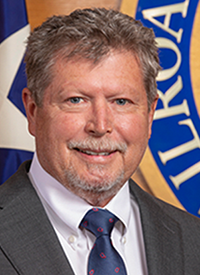
Interview with Texas Railroad Commission Chairman Jim Wright
It’s continues to be a busy year for Texas Railroad Commission Chairman Jim Wright, despite not prevailing in the Republican primary run-off election in late May. Indeed, the chairman is working on a variety of issues, including the building of partnerships to gain greater access to Canadian crude for blending purposes; trying to stabilize gasoline and diesel prices; looking for additional markets for Texas crude exports; and keeping an eye on foreign participation in Texas oil and gas properties.
With the first item in mind, Chairman Wright traveled to Calgary in early June to participate in a Global Energy Show panel discussion and also meet with Canadian officials and companies. After his panel participation, the chairman sat down with World Oil Editor-in-Chief Kurt Abraham for an exclusive interview, Fig. 1.
World Oil (WO): What was your purpose in coming up to Calgary and participating in the first afternoon panel?
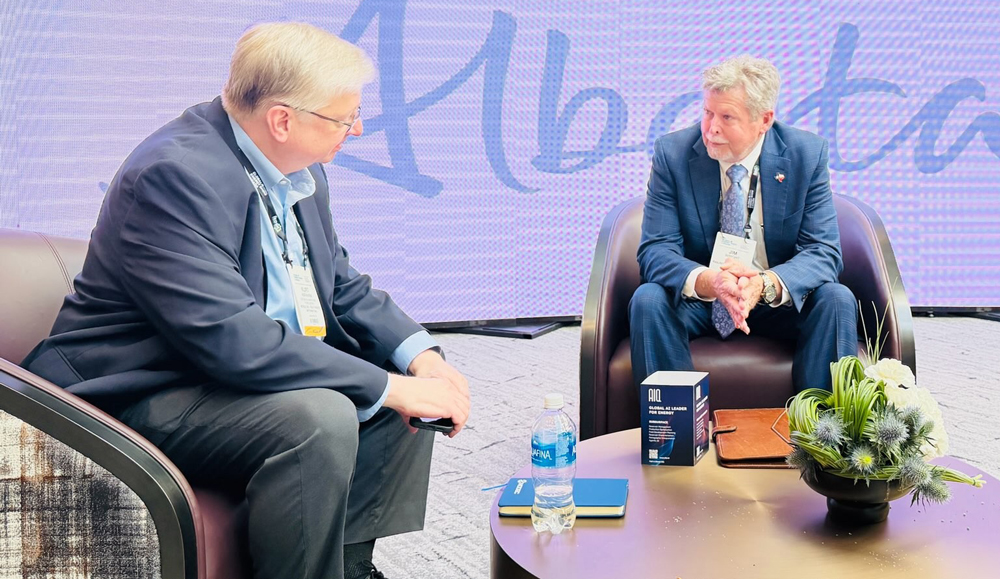
Chairman Jim Wright (JW): My purpose in coming up to Calgary (Fig. 2) is because I've been saying this now for quite some time. In Texas, we've got a lot of oil, but our oil is a sweeter, lighter crude. And given what most people have based their production on, especially for diesel or gasoline throughout the world, it has been based on our competitors’ crude, which is a heavier crude.
Although our crude works as a blend, it doesn't work in every market. So, the reason I wanted to come here is that Canada has an 18-19 specific gravity oil. When mixed with our oil, it will meet a lot more blends than what our oil does, which to me gives us more exposure to markets throughout the world. And, I think, given the way the geopolitics are looking today, it's going to be important for us to have these types of partnerships, as with Canada.
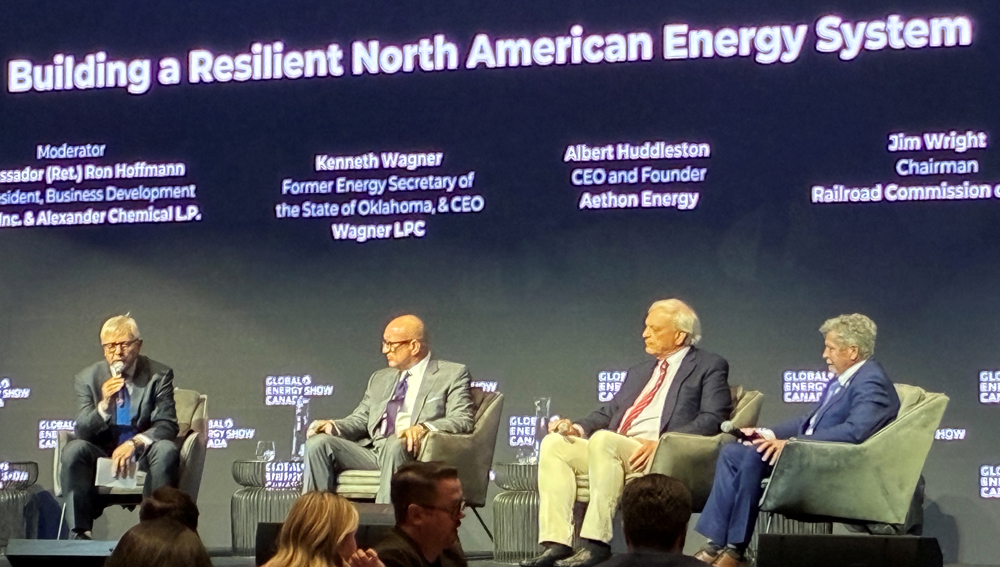
Another reason why I came up to Calgary is that I'm looking at Canada as being more stable than anyone else. Obviously, there are changes that we've seen in Venezuela, but there's no confidence in that, to be honest with you. They've got a long way to go, I think, before they're going to get investment for us to get the volumes that we need to make this opportunity real. And then, you've got Argentina and their Vaca Muerta shale, but the problem with Argentina is the volatility of what their politics have been. So that's why I’ve been in Canada.
WO: That’s understandable. So, as you look down the line over the next six months, you can see more and more of this is going to happen, given the reality in the Middle East.
JW: Well, you know as well as I do, Kurt, we're behind right now on supply by at least 20%. And people think, well, if we just end the conflict today, that would just go back to normal. That is not a true statement by any stretch of the imagination. They don't realize what really has happened over there. You've taken suppliers that were supplying that oil, and that has been disrupted, where I don't think you're going to see recovery there for the next five years, based on what you saw before this conflict happened.
So, I think that's why we're seeing more people turn to what they feel is a more stable environment in the U.S. And I just see that window for us—it's not real broad—but it's probably the biggest I've ever seen in my lifetime, as far as opportunity is concerned. And I'm excited. I'm almost giddy about it. If we can just look at the market in a common sense way of what would it take to get our products there and what blends do we have to do to make that happen and what infrastructure do we need to really be focused on in making sure we don't miss these opportunities.
WO: If you take advantage of enough of these opportunities, wouldn’t that require greater production out of Texas?
JW: Certainly. We're pretty maxed out now, exporting a lot of our oil and utilizing every drop of it that we can. But people have to remember, a lot of “normal” persons think “well we've got plenty of oil, why don't we just use it domestically.” They don't realize that we haven't really permitted a new refinery since the 1970s, and those were all based on processing a specific crude, a crude that we don't generate in sufficient quantities. And, by the way, Texas produces 43% of all the crude generated in the United States.
WO: That's certainly very true.
JW: So, you have to look at what is reality. How do we get stability in what you're paying for your diesel and gas? I've got to have that blend to make that happen. And I think those are the tweaks and twists and turns that we have to look at. But I can't get those blends done, unless we really start putting a better focus on what infrastructure looks like.
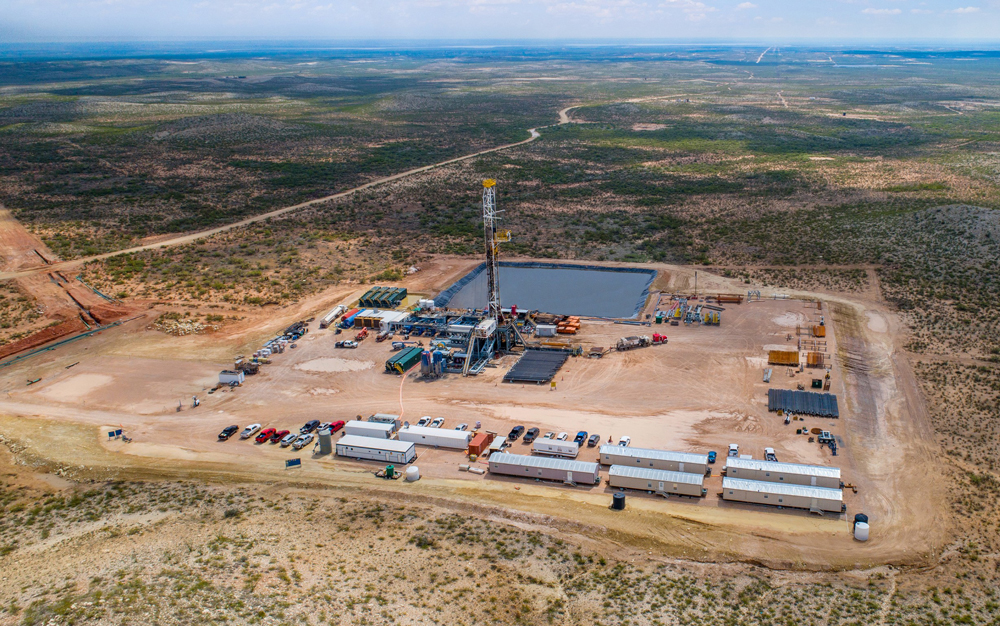
WO: Speaking of production in the state, how would you assess the current status of the Permian basin? Are we looking at relatively flat production, or is there some upside potential? Seems like operators are still holding back a fair amount.
JW: And if you wonder why they're doing that, it is because there's so much volatility going on today. In the Middle East, one day they're holding ceasefire talks, and the next day they’re firing at each other. So, if you know anything about the oil and gas business, that's not a real good, strong concrete foundation to stand on, to say, “hey, I want to hire 10 more rigs, and I want to start drilling, because the price of oil is up.” We've been down all those roads before, and a lot of lessons have been learned. Again, if we go back and focus on what is our long-term advantage here, and we start capitalizing on that and get agreements in place, then you'll see an uptick in production dramatically. That’s because we certainly have the oil from everything that I've seen in reserves, especially in the shale throughout Texas. We've still got a lot oil in Texas, Fig. 3.
WO: No doubt about that. So, what else could the commission do to help producers in the state right now?
JW: I've been doing it as a commissioner, and I said it a little bit earlier on during the opportunity I had onstage here. If you just look at my mission statement, of course we're responsible for the safety of the industry that we regulate. We're responsible for the environmental impacts of those industries. But there's a third thing that says we're also responsible to make sure that these industries’ economic vitality remains and is secure.
And when I look at that economic vitality. I think it's the leaders that you are electing into these offices that make that a reality. Unfortunately, today we're facing some volatility in Texas that I hope will result in getting people into office that can recognize what these opportunities are and come together and capitalize on that. So, I think the answer lies in who's going to be your political leaders. I don't want people to learn that lesson the hard way.
I would rather get the message out to leadership today to say, look, guys, here's the opportunities and you really need to focus and pay attention on that. Because what that means for not only us domestically but for the rest of the world is stability and this pricing, as we move through the future. In all of our history, all we've seen in this industry is peaks and valleys. This is an opportunity, I think, for us to alleviate those peaks and valleys and look at stability as we move through from now on.
WO: There was a little bit of a wave in the last couple of years of foreign company participation in some of the Texas plays. Do you see that continuing?
JW: I've been at the commission for six years now. I never see that very much. I know there's some foreign interest in things. I mean, our own U.S. President has gone to Japan and said, “hey, bring your money over here and invest it.” A lot of that stuff is driven by geopolitics. But I have not seen where it's been a dominant thing for the oil and gas industry.
I think as long as we keep the laws that we have on the books today, about how you do business in not only in Texas, but in the United States, and we start merely focusing on making people adhere to those laws, a lot of the things that I think are manifested concerns today by a lot people will go away. I think the focus needs to be on how do we improve our law enforcement, how do we improve enforcing our laws we already have on the books. And if we do that, then any concerns we have about some foreign nation taking over our assets here are reduced. It can't happen, because we already have laws in place that will prevent that from happening.
WO: Going back to your previous reference to the leaders that this state elects, should we assume you're referring to races like the railroad commissioner seat that's going to be open now and some other things? Are you concerned that people won't be able to tell one good nominee from a bad one as we get down to the mid-terms?
JW: Well, I think it's important for people to get better-educated. And I think you would have seen a completely different outcome in my race, if people were educated more on what the Railroad Commission really does. And what are the benefits that that agency really provides for every person’s life and every day? I think that's where the reality has always been politically, and we're certainly not a nation that's perfect politically, and we need to do some more improving.
That's one of the spaces that I think about when I talk about watching out for who we put in as leaders and recognizing whether the leader that I'm going to go out and vote for is going to improve my daily life. You really have to do a deep dive into that. It's easy to talk the talk, but it's really hard to walk the walk. And I've always been one that I don't say a lot, but I walk the walk. And I think that's what the focus needs to be more on—who we're going to be electing into office, as we move forward with our leaders, whatever side of the table they come from. They need to be focused on what's going to help everyday lives for everyday people, especially if people don't realize what that help might be. And there's an educational portion of that, which we really need to be focused on.
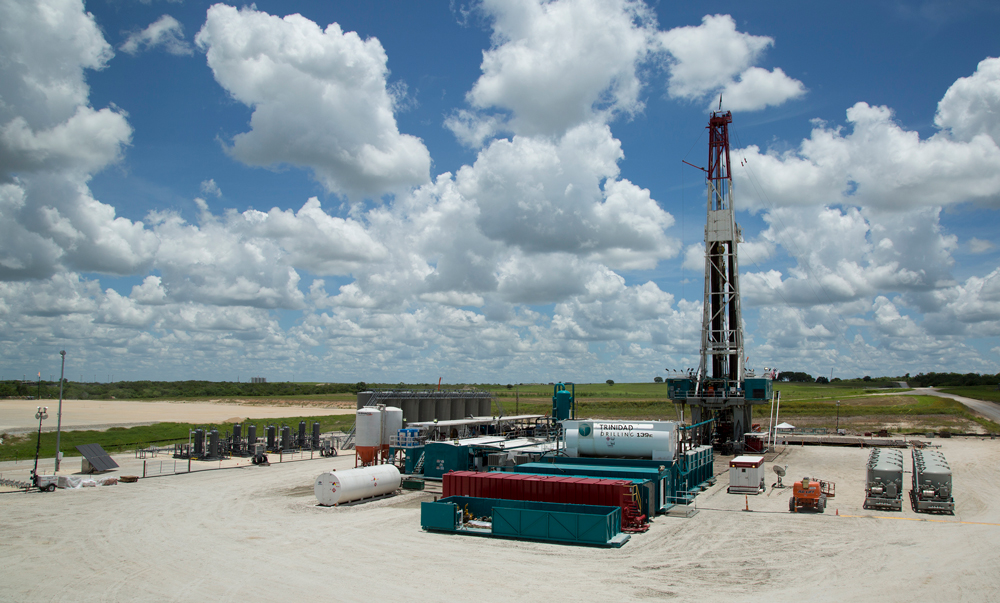
WO: What are the technical trends that you're seeing in the upstream industry that you think are going to continue to affect activity?
JW: In the oil and gas industry, it seems like every hour our technology changes. If you look at just the improvements that we're making in drilling, just think about where we were three years ago and what we're doing today. It seems to change literally overnight. You know, there's challenges that we are having today in Texas that we really didn't focus on whenever we discovered the new shale, Fig. 4. But that’s why we're doing what we do today because of that discovery.
We have challenges there that I think are great opportunities. Take water as number one. People don't realize that with crude output, we produce a lot of water, and, unfortunately, we're not able to put that water back exactly where it came from. This has created challenges in seismicity and over-pressurization. But, when I look at things that could inhibit what our production could be, I also look at what opportunities that this might bring.
And if you're from Texas and reading this story, half of us in Texas are running out of water right now. I believe that given what our challenges are with produced water and how we're going to be managing that in the future, is a source of water, given technology advances on how to treat it. That's going to help dilute these new sources that all these communities are gonna have to develop unless God just blesses us with a whole lot of rain from now on, which I haven't seen that in a while. I think produced water will be that dilution source to help manage what those costs are, so that those communities that are in those horrific drought conditions can continue to track what made heir communities in the first place, which is industry.
And you've got to stay competitive, because I don't think they have a water problem in Houston. And I know they don't have one in Louisiana. So how do we help those people stay competitive in keeping industry in those communities? I think growing natural gas is a huge answer to what that's going to have to be. I don't think there's a choice in that. But again, it goes back to what I said earlier. It takes leaders that have knowledge, and know how to think outside the box a little bit. And then, I've been in business—in real business—not something they just looked at up there and said they were in. How do you see AI?
WO: Hopefully helping the industry to make further gains in productivity.
JW: I think so, but I don't know. AI scares me a little bit in some circumstances, but I think it's a good thing, if it's used correctly. I hate to tell you what my prediction is for AI for the future, because I think that it's going to track the worse instead of the better. That's just my personal opinion. I hope people will see the benefits of it and not how they can take advantage of things that we don't see.
The Honorable JIM WRIGHT was elected as the 51st Texas Railroad Commissioner in 2020, becoming the first statewide elected official from South Texas in almost 20 years.
Chairman Wright first started working in the energy sector at age 19. Through hard work, determination, and a little luck, he capitalized on his years of hands-on experience to create a group of environmental companies that served the energy industry. As Chairman of the Railroad Commission, he has championed solution-oriented leadership and encouraged industry and the public to engage collaboratively with the agency for the long-term benefit of the citizens of Texas. Chairman Wright believes that the success of the Texas economy and the energy industry are closely linked, and that increasing and strengthening access to global energy markets will ensure Texas remains an energy and economic powerhouse for years to come.
Related Articles- How new technology is advancing well construction efficiency in the Permian basin (July)
- Well construction technologies advancing the Permian basin: Industry progress, new benchmarks and field insights (July)
- First Oil: Low expectations for new UK prime minister (July)
- Maximizing horsepower delivery in modern frac fleets through advanced pump design (July)
- First Oil: Renewed enthusiasm exuded in Canada and within IPAA (June)
- Extended-length gas separation improves ESP stability in slug-prone Permian wells (June)